

Does Teeth Whitening Damage Your Enamel? What the Science Actually Says
Health
June 26, 2026


No. Professional teeth whitening, used as directed, does not damage tooth enamel. The peroxide opens microscopic pores to lift stains, and enamel rehardens within hours after treatment ends. What causes damage is misuse: over-the-counter gels used for weeks on end, DIY acid-based "whitening" hacks, or grinding and enamel erosion that existed before whitening ever started. Here is what the science actually shows, and what to watch for.
Whitening is bleach, and bleach burns through enamel.
It's one of the most common things patients tell me they read online, and it's built on a kernel of truth that gets exaggerated into something not quite accurate. Let me walk through what's actually happening inside the tooth when you whiten.
The active ingredient in virtually all professional whitening is either hydrogen peroxide or carbamide peroxide (which breaks down into hydrogen peroxide inside the mouth). When the peroxide gel contacts the tooth, it diffuses through the enamel into the underlying dentin. That diffusion is possible because enamel is not solid. It's a crystalline structure with microscopic pores between the crystals.
The peroxide reacts with stain molecules inside the tooth and breaks them apart. The color goes away. The enamel itself is not consumed in this process.
After the whitening session ends, saliva and minerals from everyday foods remineralize the enamel within 24 to 48 hours. Studies in the Journal of the American Dental Association and Operative Dentistry have repeatedly shown that enamel hardness returns to baseline within a few days of stopping treatment.
That's the science. Whitening temporarily dehydrates and makes enamel slightly more porous for about a day. Then it rehardens.
This is the source of most of the damage fear, and it's worth explaining properly.
That sensitivity is not enamel being destroyed. It's the peroxide molecules reaching the tiny fluid-filled tubules inside the dentin. Those tubules connect to nerves. When you whiten, those nerves are briefly more exposed to temperature changes and sweet or acidic foods. Cold feels very cold. Sweet feels sharp.
The sensitivity almost always fades within 24 to 72 hours. It's not a sign of permanent damage. Patients with pre-existing receding gums or cracked enamel may feel it more intensely, and those cases are where we adjust protocols before we start.
Here's where the concern is legitimate, because there are a few things that genuinely do harm enamel. None of them are professional whitening.
The reason patients sometimes blame whitening is because whitening can reveal underlying damage that was already there. If the enamel on a patient's back molars is already worn from grinding, whitening does not cause the wear. It makes the remaining surface slightly more sensitive for a day, which makes the existing damage more noticeable.
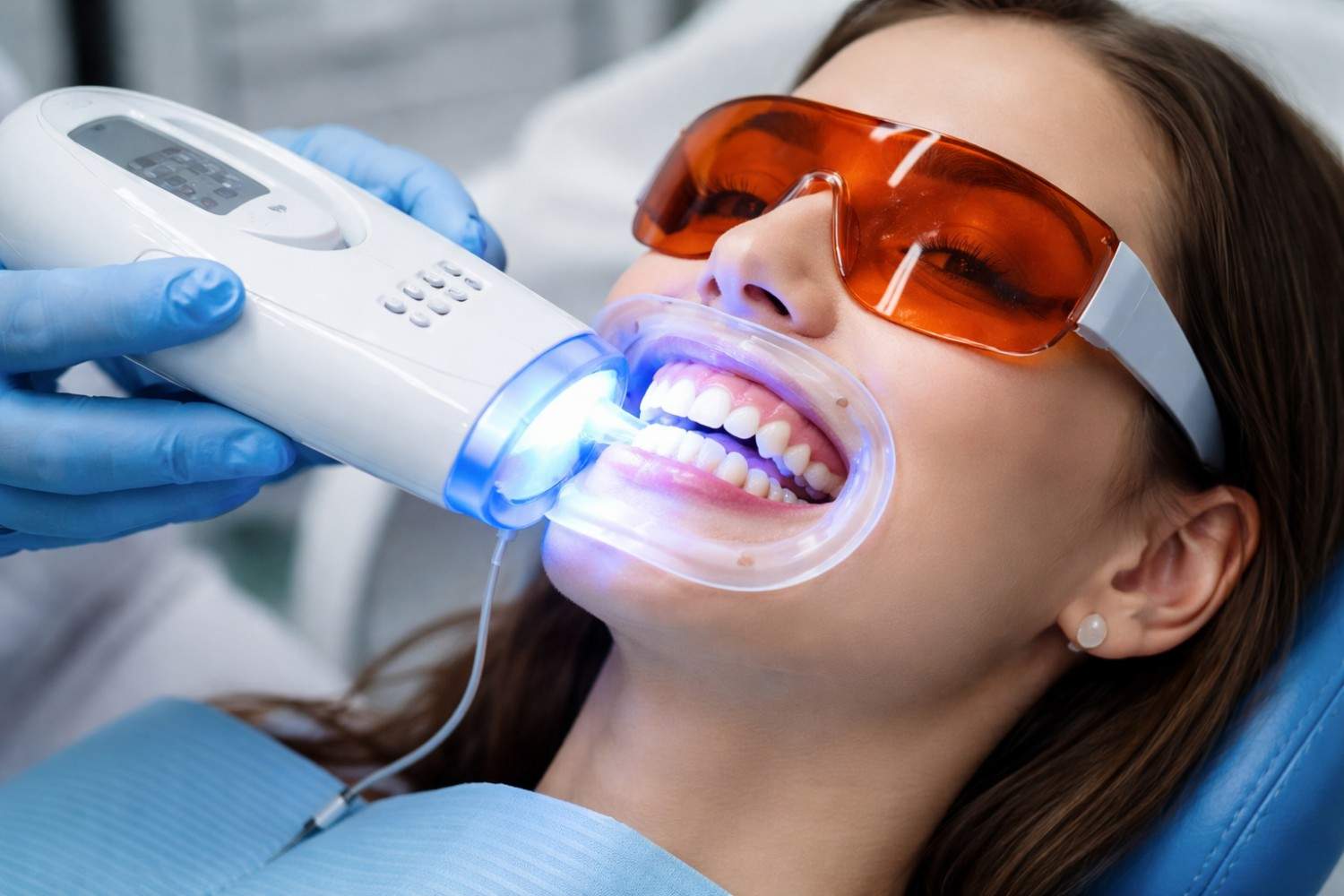
At Redefine Dental, we offer both in-office teeth whitening (higher peroxide concentration, done in about an hour, one session) and take-home whitening with custom-fitted trays (lower concentration, done over two weeks).
Both work. Neither damages enamel when used correctly. The difference is speed and intensity of sensitivity. In-office gives a faster result, and patients sometimes feel the sensitivity more acutely. Take-home builds the result gradually and tends to be gentler.
What we don't recommend is the drugstore kit used for weeks with no dental oversight. The concentration is low, which means patients tend to over-use the product to see results, and that over-use is where problems start. The tray doesn't fit the patient's specific bite, so the gel spreads onto the gums, which causes irritation. And without a dentist checking the teeth first, existing cracks or recession are treated without adjustment.
A patient came in recently asking for in-office whitening before a family event in three weeks. During her exam, we found significant wear on her lower incisors that had exposed dentin. Whitening would have made the exposed dentin temporarily very sensitive, and because dentin doesn't respond to peroxide the same way enamel does, the color would not have matched the upper teeth.
We treated the wear first with cosmetic bonding to rebuild the biting edges, and then whitened. The final result was better than what she had asked for, because the teeth were now both whiter and the right shape.
This is the honest reason we examine before we whiten. Not to upsell, but because whitening is the finishing touch on a healthy tooth. It cannot be a substitute for fixing something that is already broken.
If you want whiter teeth without risking your enamel, the safe path is straightforward.
If you're whitening and notice any of the following, stop and get evaluated.
Any of these can indicate something unrelated to the whitening itself: a crack, a cavity, or recession that needs direct attention.
Yes, with a caveat. Peroxide only whitens natural tooth structure, not porcelain or composite. If you have front-tooth fillings or porcelain veneers, they'll stay the same shade while your natural teeth brighten. Sometimes we plan around this by replacing visible restorations after whitening.
A practical benchmark: if your teeth appear brighter than the whites of your eyes, the shade usually reads as artificial. Natural-looking shades on the Vita guide sit between A1 and A3.
No. When done with professional-grade products at recommended intervals, the temporary porosity fully reverses within a couple of days.
A touch-up every 6 to 12 months is reasonable for most patients. Anything more aggressive than that is a case-by-case decision and should be supervised.
No. Activated charcoal is abrasive, and its whitening effect is surface polishing rather than actual color change. Regular use can wear enamel over time and lead to the exact sensitivity patients were trying to avoid.
Professional teeth whitening, done right, is one of the safest cosmetic procedures in dentistry. The damage myth comes from misuse, pre-existing enamel problems that whitening reveals rather than causes, and temporary sensitivity that gets misinterpreted. If your teeth are healthy, whitening brightens them. If they're not, we fix that first, and then whiten. That's the order that keeps the enamel intact and the result natural.