


TMJ and Chronic Headaches: The Oral-Systemic Link Most Neurologists Miss
Health
May 19, 2026


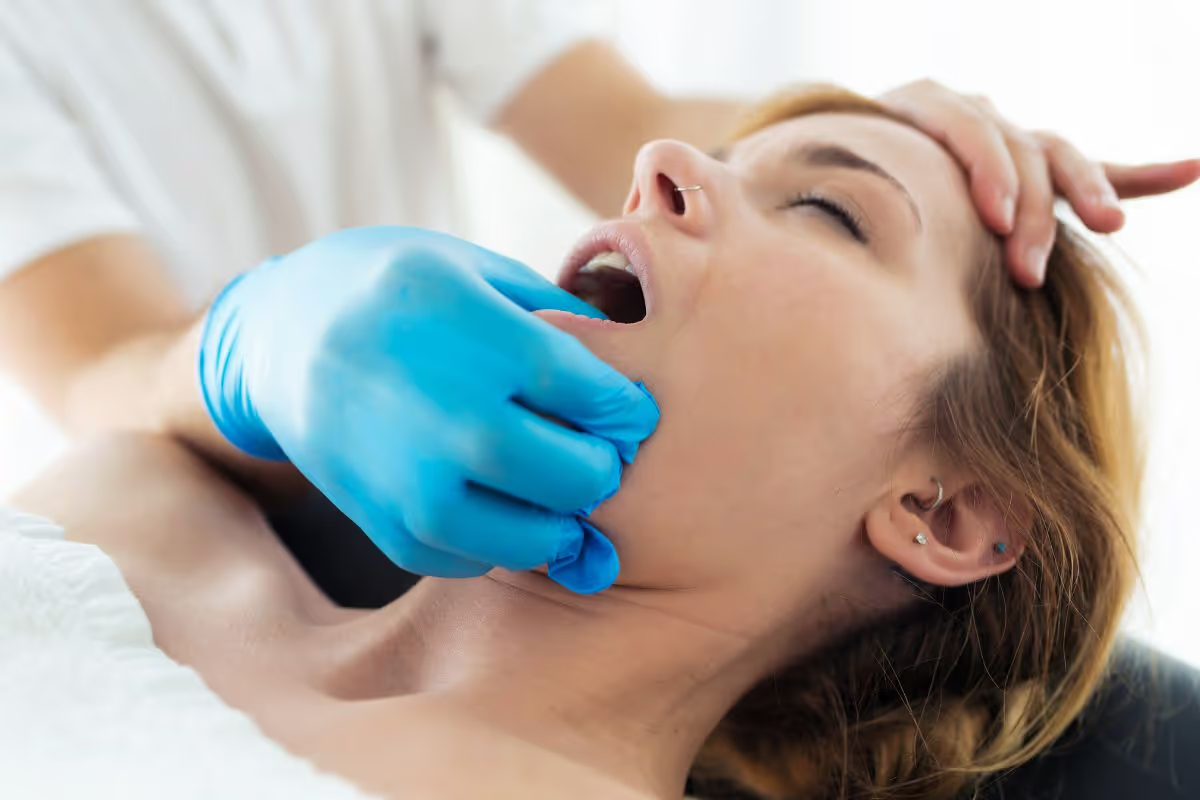
I've had more than a few conversations with patients who've seen three neurologists, spent two years on preventative medications, and tried every headache management app available, only to have someone finally suggest they talk to their dentist. By then, they're skeptical. But once we examine their bite and their jaw muscles, something clicks. They weren't dismissing their neurology; the neurology workup was incomplete. The mouth matters here, and most headache protocols never look.
This is where the real work starts. Many of my chronic headache patients have never had anyone examine the trigeminal nerve's peripheral anatomy, their occlusal relationship, or the muscle patterns that drive daily tension. That's not a criticism of neurology. It's just a different lens, and it's the one I bring to the table.
Temporomandibular joint (TMJ) dysfunction and related muscle hyperactivity can trigger or sustain chronic daily headaches, tension-type headaches, and sometimes migraine patterns through trigeminal nerve involvement and referred pain. A Kois-trained dental workup looks for structural jaw problems, muscle tension, and bite irregularities that many headache sufferers never get evaluated for. Treating the underlying occlusal and muscular dysfunction often resolves headaches that medications alone did not.
The first thing I do is listen. Not to the headache complaint itself, but to the story around it. How long? Every day or episodic? Worse in the morning or evening? Any jaw clicking, clenching at night, or difficulty opening wide? These details tell me whether I'm looking at a muscular problem, a structural jaw problem, or both.
Then I look at photographs. Frontal and lateral views, closed and open bite. I'm looking for symmetry in the lower face, any deviation of the midline, lip support, the way the mouth closes. Photos are diagnostic. They show me whether the patient is favoring one side, whether there's forward head posture (common with headache patients), or whether the bite collapses when the mouth is open.
After photos come the oral exam. I palpate the masseter muscles, the temporalis, the muscles of the neck. I check jaw opening range (normal is about 40-45mm without clicking or locking). I listen for clicks, pops, or grinding sounds. I look for wear facets on the teeth, which tell me the patient is grinding or clenching, often at night. I check for muscle tenderness, restricted movement, and any asymmetry in how the jaw tracks when opening and closing.
Here's what I think about, in the same order every time.
One: Trigeminal nerve anatomy and referred pain.
The trigeminal nerve (cranial nerve V) branches into three divisions. The mandibular division innervates the lower teeth, the jaw muscles, and the TMJ itself. When muscles in that region tighten, become overactive, or the joint is compressed, the trigeminal nerve responds. The pattern of referred pain is predictable. Masseter tightness radiates up into the temple and sometimes behind the eyes. Temporalis muscle tension causes pain across the top of the head and into the frontal region. These are not mysterious. They're anatomy.
Two: Occlusal forces and muscle hyperactivity.
If the bite is off, even by a millimeter or two, the jaw muscles work harder to close and stabilize. If the back teeth don't make contact evenly, the front teeth take more force. If there's a crossbite or an open bite, the muscles compensate. Over months and years, this sustained hyperactivity creates muscle knots, trigger points, and eventually, daily headaches. Many patients don't remember the starting point. They've been grinding their teeth at night for so long that the clenching feels normal. But the headaches are not normal. They're the body's signal that the system is working too hard.
Three: Morning headaches and bruxism.
Sleep bruxism, or nighttime clenching and grinding, is one of the strongest predictors of morning headaches. The patient wakes up with their masseter and temporalis muscles already fatigued and inflamed. They start the day in tension. If they also have daytime clenching (stress, concentration, or pure habit), the muscles never fully relax. The headache that starts in the morning persists through the afternoon.
Here's what tells me a headache is likely jaw-related.
Morning headaches that ease slightly as the day goes on. Wearing of the chewing surfaces (flat spots on the cusps, called wear facets). Muscle tenderness when I press on the masseter or temporalis. Limited jaw opening with clicking or popping sounds. A history of clenching or grinding, whether the patient admits to it consciously or not. Neck and shoulder tension that mirrors the headaches. Asymmetry in the lower face or deviation of the jaw midline when closing.
No single sign is diagnostic, but the pattern is. If I see wear facets, morning headaches, masseter tenderness, and a restricted jaw opening with a click at the endpoint, I'm confident we're looking at a TMJ-related headache. Sometimes there's also a history of trauma, like a fall that hit the jaw or a long dental procedure that left the mouth open too wide. Other times, it develops slowly over years from pure muscle imbalance.
My approach follows the Kois philosophy: diagnose first, stabilize second, restore third.
The first step is muscle stabilization. This often means a custom night-day guard that holds the jaw in a physiologic position and prevents grinding and clenching. A well-fitted guard is not just a layer of plastic. It should maintain the jaw in a position where the muscles can relax, where the joint is not compressed, and where the bite forces are distributed evenly across the teeth. I make adjustments at follow-up visits until the patient's headaches begin to ease.
For patients with severe muscle hyperactivity or tension that doesn't resolve with a guard alone, Botox injections can relax the masseter and temporalis muscles, breaking the chronic tension cycle and often resolving the headache within two to four weeks. This is not cosmetic. It's therapeutic. The dose is lower than aesthetic Botox, and the goal is function, not appearance.
If there are other factors contributing, I address them. Gum or bone issues may need bone and gum grafting. An uneven bite might require selective adjustments to the existing restorations, or in more complex cases, full mouth rehabilitation to restore the correct vertical dimension and occlusal relationship.
The key is the sequence. I never recommend permanent crowns or veneers until the muscles are stabilized and the bite is proven to be in the right position. Too many dentists restore without this step, and the patient ends up with new restorations that don't fit the healed jaw position. So I diagnose, guard, observe, adjust, and only then restore.
If you've seen neurologists, tried preventative medications, and your chronic headaches persist, a dental evaluation for TMJ dysfunction is worth your time. Many patients expect us to find something dramatic, like a dislocated disc. Often, it's simpler: muscle tension, grinding, and a bite that's not aligned with where your jaw naturally wants to sit.
At Redefine Dental, we start with photos, palpation, and a detailed history. If we think the headaches are jaw-related, we'll discuss a TMJ treatment plan that begins with stabilization, not surgery. And we'll keep your neurologist in the loop. This is not either-or. This is both-and. A proper dental workup can resolve what medications alone could not, because we're treating a different system.
If you live in the Dallas area and your headaches won't resolve, reach out for a consultation. Let's look at your bite.



.jpeg)