

When a Crown Is Better Than a Veneer: Clinical Thinking From the Chair
Opinion
April 24, 2026


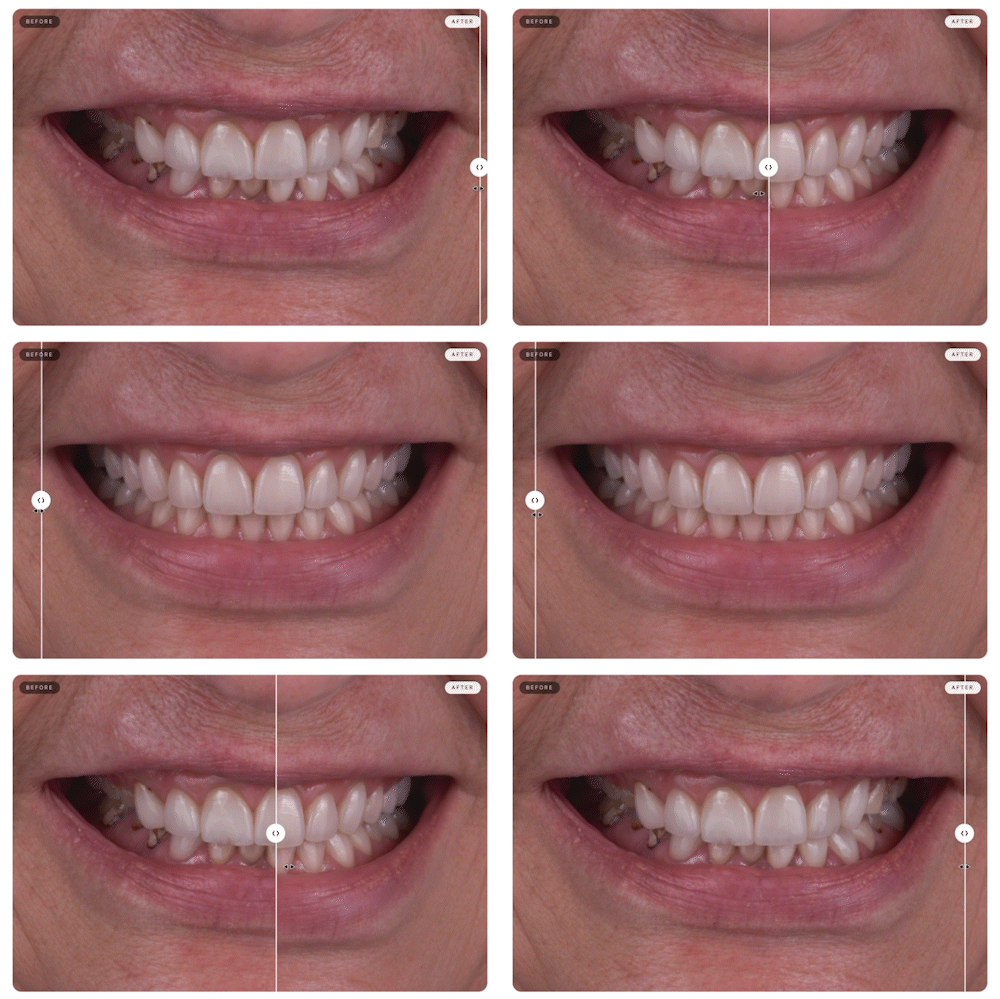
People come to Redefine Dental Aesthetic and Wellness Center asking a straightforward question: should I get a crown or a veneer? The answer sounds simple, but it isn't. Both are beautiful restorations. Both can transform a smile. The difference is clinical, not cosmetic. A veneer is a thin shell for a healthy tooth that has a cosmetic problem. A crown is a full coverage restoration for a tooth with structural loss. Understanding that distinction changes everything about how I diagnose and what I recommend.
Choose a veneer when a tooth is structurally sound but cosmetically compromised. Choose a crown when the tooth has existing large restorations, a history of root canal therapy, significant cusp loss, or cracks extending into the body of the tooth. Function dictates the choice, not preference.
When I sit down with a patient and photos are pulled up on the monitor, my first thought is structural. How much tooth structure is already gone? What's holding this tooth up?
Porcelain veneers work best on teeth where the underlying structure is intact. We remove a small amount of enamel from the front surface to create space for the veneer shell. The bulk of the tooth remains. That works beautifully when the tooth is sound. But if significant structure is already missing, a veneer leaves too much compromised dentine exposed. It doesn't protect the tooth. It doesn't reinforce it.
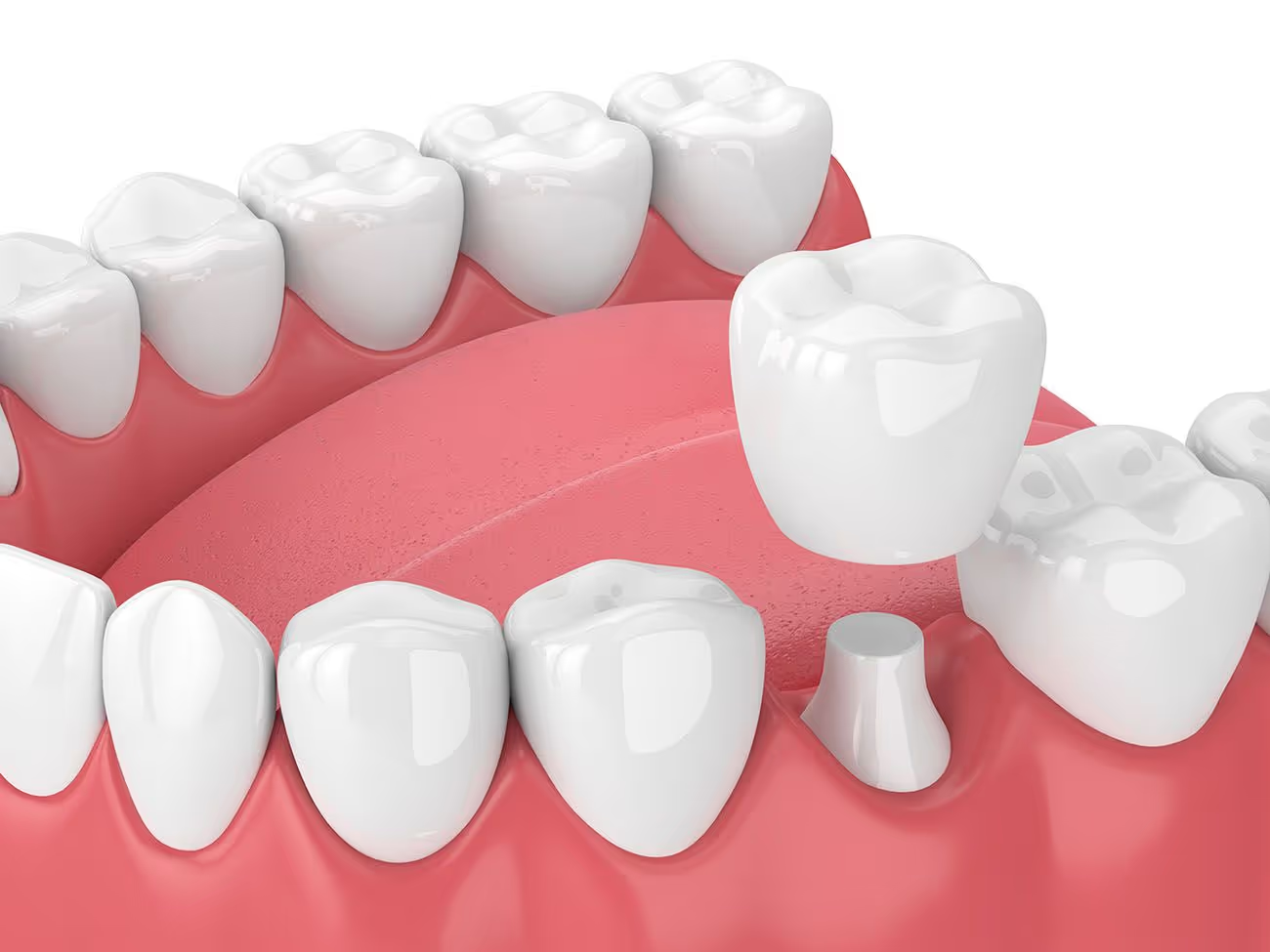
A dental crown is the opposite approach. We remove more tooth structure, yes, but then we surround the entire tooth with a protective layer of porcelain or ceramic. The crown absorbs the forces. It shields what's left underneath. For teeth that have already lost significant structure, that protection is the whole point.
One: existing restorations. If a tooth already has a composite filling or amalgam restoration that occupies more than 50 percent of the tooth, a veneer doesn't make clinical sense. That large restoration is already compromised. It's going to need to come out. Once I remove it, the remaining tooth structure might be fragile, even if it looks solid in the photograph. A crown wraps around the whole tooth and gives me somewhere solid to bond to. It also distributes forces more evenly, which protects the weakened underlying dentine. So I decided early in my career to always present the crown option when I see that much existing restoration. It's not the flashy choice. It's the predictable path.
Two: endodontic history. A tooth that has had root canal therapy is structurally weaker than a vital tooth. The pulp is gone. The tooth is no longer living. Endodontically treated teeth can become brittle over time, especially as the years pass. When I see that clinical picture and the patient also has cosmetic concerns, I think crown first. The reinforcement the crown provides is not just cosmetic. It's structural insurance. I've seen too many veneered endodontically treated teeth fail years later with a crack that runs through the root. I want to avoid that outcome. It's one of the reasons I don't compromise on crown coverage when I'm restoring a tooth that's already been through root canal therapy.
Three: loss of tooth structure from grinding or trauma. Some patients come in after years of grinding at night. The cusp has worn down. The tooth is shorter. The incisal edge sits lower than the adjacent teeth. The smile doesn't read symmetrically. A veneer can add some height back on the front surface, but it can't rebuild the cusp or restore the lingual anatomy. A crown can. I can reconstruct the bite surface. I can create the anatomy the tooth should have. When cusp loss is significant, the crown restores what's missing, not just what shows. It also restores function, which a patient might not have noticed they'd lost.
I see a crack and the first question is: how far does it go? Is it on the surface? Does it penetrate into the body of the tooth?
Small surface cracks can sometimes be managed with a veneer or a direct composite restoration. But when the crack extends into the dentine, into the structure of the tooth itself, a veneer is not enough. The veneer sits on top. It covers the crack visually, but it doesn't stop the underlying fracture from spreading. The crack will continue to propagate under load. Every time the patient bites, the two sides of the crack move slightly. That movement is tiny, but it's repetitive. Six months or a year after the veneer goes in, the patient is back in my chair because the tooth fractured further, often into the root. A crown is the only restoration that can stabilize a crack by surrounding the entire tooth and distributing forces evenly. The crown absorbs the bite force instead of transmitting it directly into the fractured area. So I decided that if a crack goes deep, I present the crown as the clinical standard, not the cosmetic option. It's the only way to predict long-term success.
This is a different kind of clinical decision. I recently saw a patient where teeth 11, 12, and 13 (the right central incisor, lateral incisor, and canine) had all been restored with crowns years ago. The patient was unhappy with the appearance of tooth 12. She wanted it refreshed.
My impulse was to offer a veneer. The tooth structure seemed intact. But I looked at the adjacent crowns and realized that the cement line on the existing restorations was visible when she smiled. To make the new restoration match the adjacent teeth at the gum line and throughout the contact, I would need a crown, not a veneer. A crown would allow me to control the contours exactly and match the existing restorations at the line angle. A veneer can't do that reliably.
So I decided to recommend a crown and replace the adjacent restorations too, so they all had a unified appearance and consistent subgingival anatomy. That's a bigger case, but it's the clinical path that gives the patient what she's actually asking for, which is a cohesive smile.
If you're weighing a crown against a veneer, the first step is always a close look at the tooth in question. We take photos. We talk through the history: is there an existing filling? How large is it? Has the tooth had a root canal? Are there cracks or cusp loss? What does your bite pattern look like? From that conversation, the right restoration becomes clear. Most of the time, patients find that they understand the recommendation once they see the structural picture laid out in front of them. It's not about preference. It's about what the tooth actually needs. Function comes first. Aesthetics follow.
Redefine Dental Aesthetic and Wellness Center offers both porcelain veneers and dental crowns as part of comprehensive restorative dentistry and full mouth rehabilitation. If you're thinking about either restoration, schedule a free consultation so we can look at your specific situation together. I'll walk through the clinical thinking with photos, and we can talk through the trade-offs in detail. A crown is $2,750 and a porcelain veneer is $3,135 per tooth, each custom-made in a lab for that one tooth, so the total follows how many teeth need treatment.
Quick answers to the follow-up questions patients ask most often. If yours isn't here, Dr. Timin is happy to walk you through it personally.
Get a custom treatment plan built around your smile, your bite and your health, designed by Dr. Timin.
Sometimes, but grinding changes the plan. Darya Timin, DDS, FAGD, checks the bite and wear pattern first, because heavy nighttime forces can chip or crack thin porcelain. When grinding has already shortened teeth, a crown, or veneers protected by a custom night guard, is often the more predictable choice.
Yes. A crown covers the whole tooth, so more structure is shaped away than for a veneer, which only covers the front surface. That trade is worth it when the tooth is already weakened, because the crown holds what is left together and spreads biting forces evenly.
Not the way natural enamel does. Porcelain crowns and veneers resist coffee, tea and red wine stains, and what discoloration does appear usually shows at the edges where the restoration meets the tooth and gums. Regular cleanings and careful brushing at the gumline keep those edges looking natural.
At Redefine Dental Aesthetic and Wellness Center, a crown is $2,750 and a porcelain veneer is $3,135 per tooth. Both are custom-made in a lab for one tooth, so the total follows how many teeth need work. Depending on the plan, insurance has helped cover crowns, and the office files the claim for you.