

Cosmetic Dentist in Turtle Creek: A Local Guide
City
April 17, 2026


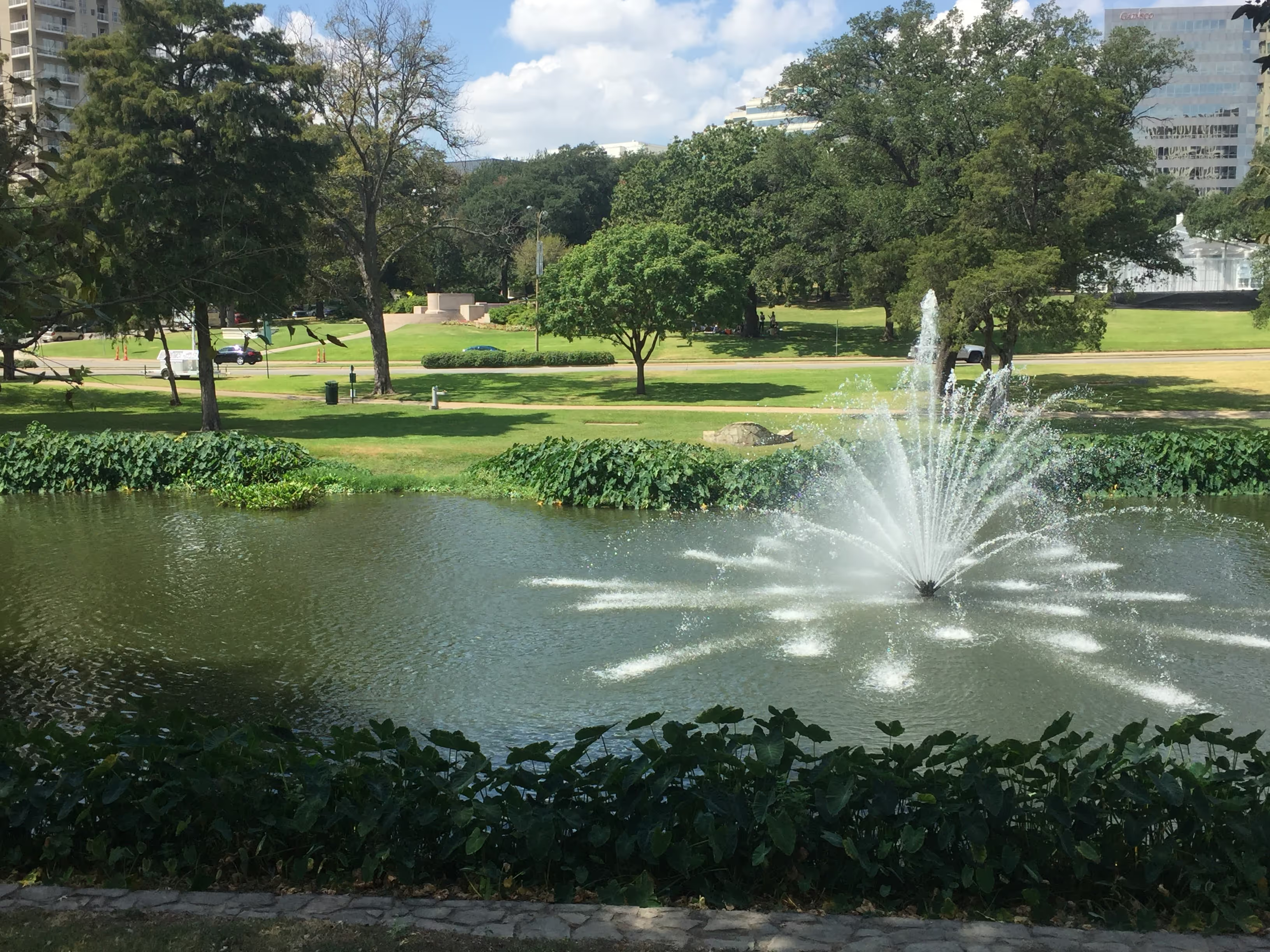
I've been treating patients from Turtle Creek for years now, and I notice something consistent in the way they approach cosmetic dentistry. The neighborhood itself is all refinement and polish, high-rises along Turtle Creek Boulevard with sight lines to the Dallas skyline, close enough to the Katy Trail that patients often mention their morning runs. The people who live there tend to think the same way about their teeth: they want things to look intentional, maintained, and quietly confident. Not flashy. Not trendy. Invested in.
In this post, I'm walking through what I actually see in consultations with Turtle Creek patients, which cosmetic treatments come up most often in those conversations, and how I approach the planning process when someone in the neighborhood comes in.
Turtle Creek patients considering cosmetic dentistry usually want one of two things. Some want maintenance-level work: professional teeth whitening, subtle bonding touch-ups, or Invisalign refinement on teeth that have shifted slightly after previous orthodontics. Others want investment-level restorations: porcelain veneers for comprehensive smile refinement, full-mouth rehabilitation after wear or prior dental work, or a phased smile makeover that might span multiple appointments over months. What they share is a preference for work that looks like an optimized version of their own smile, not a dramatic transformation. Redefine Dental specializes in exactly this kind of conservative-but-comprehensive approach.
Turtle Creek's demographics shape what I see in the chair. The neighborhood is a mix: young, successful professionals who own lofts in the high-rises, plus established families who've been in the area for decades. The young group tends to arrive with a specific maintenance question (my whitening is fading, my Invisalign is causing minor relapse, I want bonding on this one tooth). The longer-term residents often come in thinking about a bigger project: they've noticed their smile has changed over twenty years, they're ready to refresh it, and they want to do it once with quality materials that will hold.
This means my Turtle Creek book looks different from, say, a practice in a younger neighborhood. I'm doing fewer extreme transformations and more meticulous, durable work. That works for me. I prefer predictability over flash anyway.
When a Turtle Creek patient sits down across from me, I'm working through the same clinical framework every time.
One: How many teeth am I actually going to address? This is not a conversation about "a whole smile makeover" in the abstract. I'm looking at photos, I'm looking at the existing restorations, I'm counting which teeth need work and which don't. A patient might come in thinking "I want new veneers," and what I'm actually seeing is that three teeth need work, the other eight are fine, and we don't touch them. That's a different conversation than blanket veneer proposals.
Two: What's the gum tissue symmetry telling me? You can have perfect veneer restorations and still have an asymmetrical-looking smile if the gum tissue doesn't support it. I'm evaluating whether the margins are even, whether the tissue drapes symmetrically, whether we need gum recontouring before, during, or after the restorative work. For Turtle Creek patients, this is almost always part of the conversation. The neighborhood has a lot of patients who've had previous cosmetic work elsewhere, and gum tissue is often the part that wasn't considered.
Three: What does the bite tell me? A beautiful veneer on a misaligned bite will fracture. So I'm always assessing whether we need Invisalign as a precursor, whether the anterior guidance is correct, whether there are any signs of clenching or grinding that need to be managed. If I'm recommending porcelain veneers, I need to know the bite is stable first.
My Turtle Creek consultations fall into two camps.
A patient comes in, usually in their late thirties or early forties, and says something like: "My teeth have gotten slightly duller. I had Invisalign ten years ago, and my bite has shifted just a tiny bit. I want to feel confident again, but I don't want a major overhaul."
What I'm usually recommending: professional teeth whitening as the first step, then a reassessment. Sometimes that's all they need. If there's slight relapse from the Invisalign, we discuss a short refinement phase with new aligners. If there are very minor shape issues on one or two teeth, I might recommend conservative bonding rather than restorations. The whole approach is: do the minimum that achieves the outcome.
These patients often come back a year or two later for something else, once the first step is complete. That's the right sequence.
A patient comes in who's been thinking about this for a while. They notice their smile has changed, maybe they've had bridgework or crowns placed years ago, maybe there's wear from grinding, maybe they just want a comprehensive aesthetic refresh. They're ready to invest time and money into getting it done right once.
I'm recommending smile makeovers that might combine several elements: new porcelain veneers or crowns, possibly full-mouth rehabilitation if there's significant wear across the arch, sometimes gum recontouring to reshape the tissue support, and always a detailed photo-and-video planning process so they can see exactly what the outcome will look like before any lab work begins.
This is where my Kois Center training shows up most visibly. I'm not planning from an ideal template. I'm designing around their specific face shape, their lip position, their natural tooth color, the asymmetries that make them recognizable. The outcome is refined, not standardized.
Here's something I run into a lot with Turtle Creek patients: they've had cosmetic work elsewhere, sometimes excellent work, sometimes not. When someone comes in wanting a refresh or an adjustment to existing restorations, I'm evaluating what's actually there.
If the veneers are well-made and the design is solid, I'm often recommending we keep them and focus on other elements (gum work, bite refinement, adjacent teeth). If the veneers are dated in color or design, or if they're not quite fitting the patient's face, I'm recommending replacement. I tell patients directly: this is worth redoing. This one we can work with.
That honesty matters in Turtle Creek. These patients have been to multiple providers. They know the difference between a sales pitch and a clinical assessment.
I don't do single-visit veneers. I know the market offers them, and I know some patients want speed. But I choose slow because slow allows me to:
Single-visit systems trade off accuracy, customization, and longevity for speed. Turtle Creek patients tend to prefer the opposite trade-off: they'd rather wait four weeks for veneers that will last fifteen years than get something fast that might need replacement in five.
Similarly, I don't make cosmetic recommendations based purely on what looks "bigger" or "whiter" in isolation. That's the opposite of my whole philosophy. I'm thinking about what looks like *your* smile, refined. Not what looks like my ideal smile on your face.
Redefine Dental is centrally located in Dallas, typically a 10 to 15 minute drive from Turtle Creek, depending on the route and time of day. New cosmetic consultations can be scheduled online or by calling the office. The current wait is typically one to two weeks.
First consultations are complimentary, run about 60 to 90 minutes, and result in a written treatment plan you can take with you. You don't have to decide same-day. Most of my Turtle Creek patients like to sit with the plan for a week or two before committing.
I accept major PPO insurance, and cosmetic treatment is typically not covered. Restorative work often is partially covered, depending on the plan. Financing options are available and are discussed during the planning consultation.
If you're in Turtle Creek and considering cosmetic dentistry, whether it's a maintenance refresh or a comprehensive smile investment, the right first step is a complimentary smile design consultation. Come with photos if you have them, come with questions, and come without any obligation to move forward.
I'm thinking out loud in that room, the same way I'm thinking out loud in this post. You'll know what I actually think about your smile before we plan any treatment. That's the only way I know to work.