

Cosmetic Dentist in University Park: Your Complete Guide
City
April 10, 2026


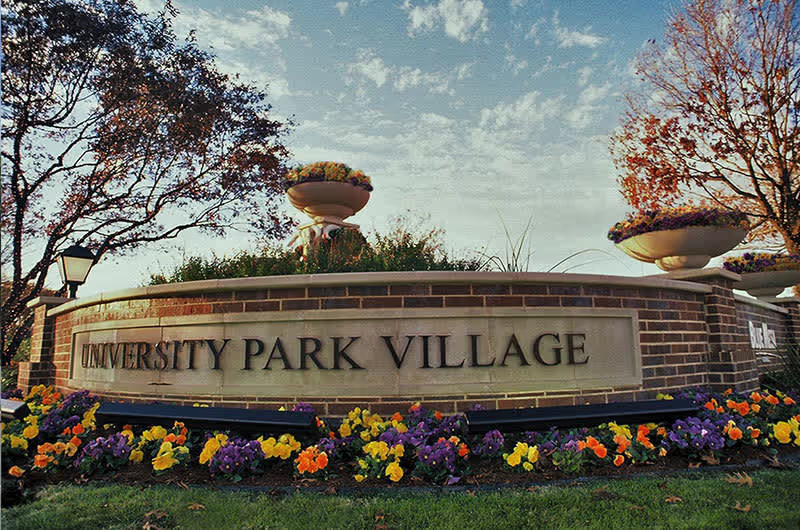
University Park is an affluent pocket of Dallas, most of it older and tree-lined, with established families, young professionals, and the SMU campus at its center. I've noticed the patients I see from University Park fall into two distinct groups: one is the established adult with stable career and family, often in their 40s or 50s, ready to invest in comprehensive cosmetic work. The other is the younger SMU-adjacent professional in their late 20s or early 30s, looking for subtle improvements without a big time investment.
What both groups share is that they're thoughtful about decisions. They ask good questions. They want to understand the approach before they commit. This post covers what University Park patients typically look for in cosmetic dentistry, and how I think about the kinds of treatment that work best for each group.
University Park patients considering cosmetic dentistry fall into two main categories: established adults looking for comprehensive smile restoration, often involving full-mouth rehabilitation or multiple porcelain veneers, and younger professionals interested in targeted improvements like Invisalign or teeth whitening. What both groups value is a planning process that factors in function alongside aesthetics, an office close to the Park Cities area, and a practice structured as a private operation rather than a DSO chain. I approach both scenarios the same way: photos first, function second, aesthetics as the outcome.
Over the past few years, I've seen enough University Park and SMU-adjacent consultations to spot patterns. Two things stand out.
First, the established adult in University Park who's ready for comprehensive work tends to have a different goal than younger patients in other neighborhoods. They're not looking for a single improvement. They're thinking about the full picture: the overall architecture of their smile, how their teeth have changed over time, how their bite is working, whether they've been grinding at night. These patients have built careers and families. They've invested in their homes and their neighborhoods. They think about dental work the same way they think about anything else with a long-term payoff.
Second, the younger University Park patient (especially around SMU) tends to want speed and specificity. One patient recently came in wanting her lower crowding fixed without braces. Another wanted her smile to look fresher for professional photos. A third had noticed his lower back teeth were worn and wanted to know if veneers on the front would make his smile look fuller. These patients aren't thinking about full-mouth reconstruction. They're thinking about one specific thing.
One. How much of the smile needs to change, and how much can stay the same.
I look at old photos first. College photos, photos from 10 or 15 years ago if you have them. That tells me what your teeth looked like before wear or aging changed them. I design to get you back to something close to that, not to an idealized template. This matters for University Park patients especially, because you've lived in this community a long time. People know your smile. A restoration that looks like a refined version of your natural smile is usually what you're looking for, not a dramatic transformation.
Two. What's your bite actually doing.
This is the functional piece. If you've been grinding at night, a beautiful veneer on a weak bite can fracture. If your back teeth are worn, your front teeth are taking all the chewing force. If your jaw is shifted because your bite has been off for years, I need to know that before I design anything in front. So I assess bite force, jaw function, occlusal forces.
University Park patients with established careers often come with the stresses that produce grinding. High-pressure jobs, long hours managing teams. I've had patients tell me they wake up with jaw pain. That's information I build into the plan, either with a night guard to protect cosmetic work or sometimes with TMJ treatment first.
Three. What timeline and phases make sense.
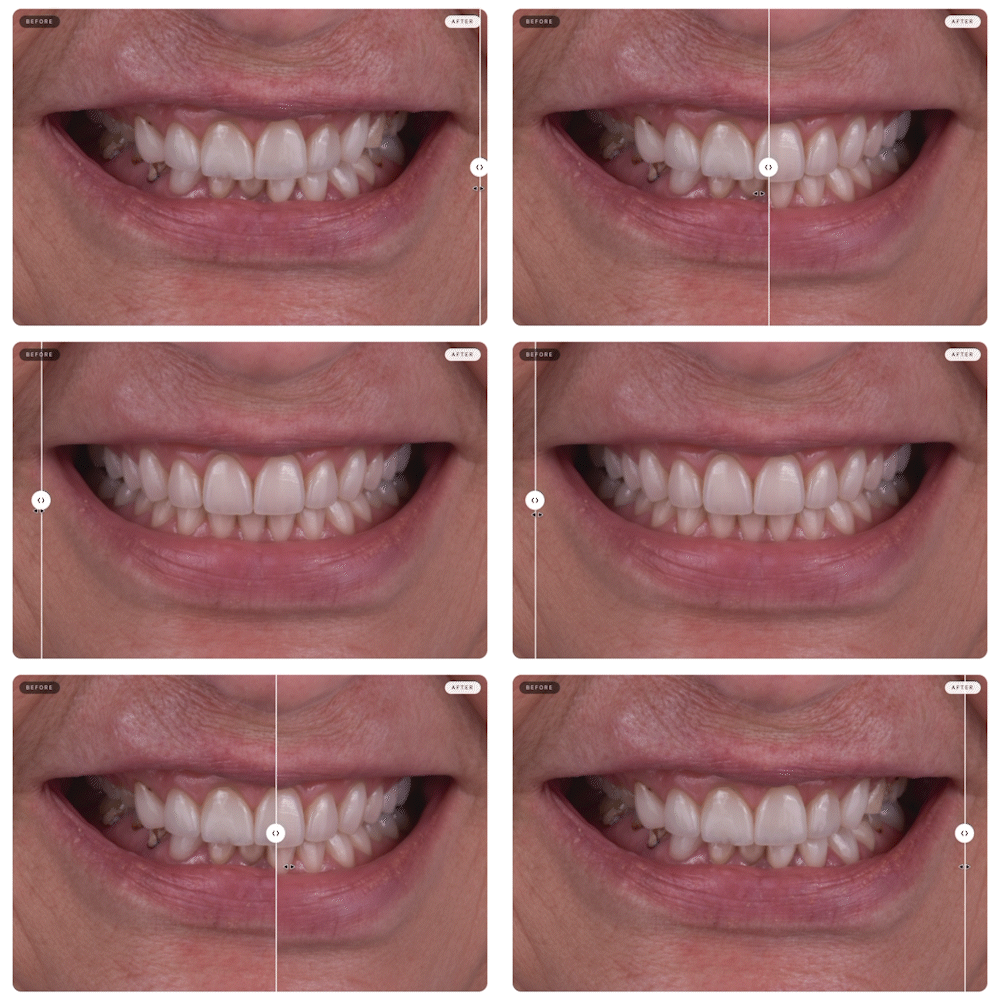
For the established adult in University Park considering comprehensive work, I'm thinking in phases. Maybe we start with alignment using Invisalign if spacing is part of the issue. Then we do porcelain veneers on the front six teeth. Maybe we add teeth whitening as the final step to make sure the color is right. The total timeline might be six to eight months for full-mouth work. For someone with established professional life, that's a manageable investment.
For the younger SMU-adjacent patient, I'm thinking faster. If you want whitening, that's same-day. Invisalign for mild crowding is four to eight months. A couple of veneers on two specific teeth is two to three weeks from design to placement. The question isn't whether we can do it, but what order makes sense.
This depends on what you want to change. If your teeth are the right shape and shade but just dingy, whitening alone might be your answer. If your teeth are slightly worn, slightly crowded, or slightly chipped, whitening won't fix the shape. That's where veneers come in.
So I look at your photos, your smile when you talk, your goals. If you show me a photo and say "I like my smile except the shade," we might just whiten. If you say "I like my smile except my two front teeth look worn," we design veneers on those two.
Sometimes yes, sometimes no. If your teeth are mildly crowded, I often recommend Invisalign first, then veneers. Straight teeth before cosmetic finishing looks better. But if you're only having one or two teeth done, Invisalign might be overkill. It's case-specific.
Yes, and here's why. Porcelain veneers take 4 visits. Along the way you see a preview of your potential new smile on screen, then wear temporary veneers while the lab makes the final porcelain, so you can try the new smile before it is placed. I could do same-day veneers, but the result is less customized and less likely to hold up long-term. I choose longevity over speed.
This is where full-mouth rehabilitation comes in. If most of your teeth are worn and veneers won't address the underlying bite issues, we're looking at a more comprehensive plan. This is the scenario I see with some of the established adults in University Park who've been grinding for years. The solution involves more than surface work.
Based on the consultations from University Park over the past couple of years, the most-requested services are:
The pathway is usually different depending on which group you're in. An established adult might come in for a smile makeover consultation and leave with a phased plan involving alignment, veneers, bite assessment, and whitening. A younger patient might come in for Invisalign and leave thinking about one or two veneers afterward.
Location: Redefine Dental Aesthetic and Wellness Center is at 6162 E. Mockingbird Ln, Suite 205, Dallas, Texas 75214, reached from University Park along Mockingbird Lane.
Appointment structure: Cosmetic consultations are free and include photography, a preview of your potential new smile on screen, clinical exam, bite assessment, and a written plan you take with you. Whitening can be initiated the same day. Veneers and other restorative work are scheduled at follow-up visits.
Scheduling and availability: Scheduling is handled through the office or online.
Insurance and financing: We file the claim with your insurance for you, so if your plan has out-of-network benefits, you can use them; depending on the plan, insurance has helped cover crowns, night guards and deep cleanings. HSA and FSA cards are accepted, Cherry lets you split treatment into monthly payments, and the Smile Wellness Membership is an option if you have no insurance.
If you're in University Park and considering cosmetic dentistry, whether it's Invisalign for alignment, teeth whitening to refresh your look, porcelain veneers for targeted refinement, or comprehensive full-mouth rehabilitation, the most useful first step is a complimentary smile design consultation at Redefine Dental Aesthetic and Wellness Center. Come in with photos and questions. The consultation is the decision-making appointment, not the treatment appointment. You'll leave with a clear understanding of what's possible and what makes sense for your situation.
Quick answers to the follow-up questions patients ask most often. If yours isn't here, Dr. Timin is happy to walk you through it personally.
Get a custom treatment plan built around your smile, your bite and your health, designed by Dr. Timin.
Often yes, once the grinding is managed. Grinding puts heavy force on porcelain, so Darya Timin, DDS, FAGD checks the bite first and usually pairs veneers with a custom night guard to protect them during sleep. Sometimes jaw treatment comes before any cosmetic work.
No. A thin layer of enamel is usually removed so the porcelain sits naturally, so the tooth will always need a covering afterward. That is why Dr. Timin shows a preview of the potential new smile on screen and has you wear temporary veneers before the final porcelain is made.
Rarely. Porcelain resists coffee, tea and wine stains far better than natural enamel or bonding. The edges where veneer meets tooth can still pick up some stain over time, so regular cleanings matter more than whitening products, which do not change the color of porcelain.
Porcelain veneers are $3,135 per tooth at Redefine Dental Aesthetic and Wellness Center. Each one is custom-made in a lab for that tooth, so the total follows how many teeth are treated: $18,810 for 6 and $25,080 for 8. HSA and FSA cards and monthly payments through Cherry are accepted.