


Botox for Gummy Smile: What Actually Happens, and Why It's Not Just Cosmetic
Services
February 20, 2026


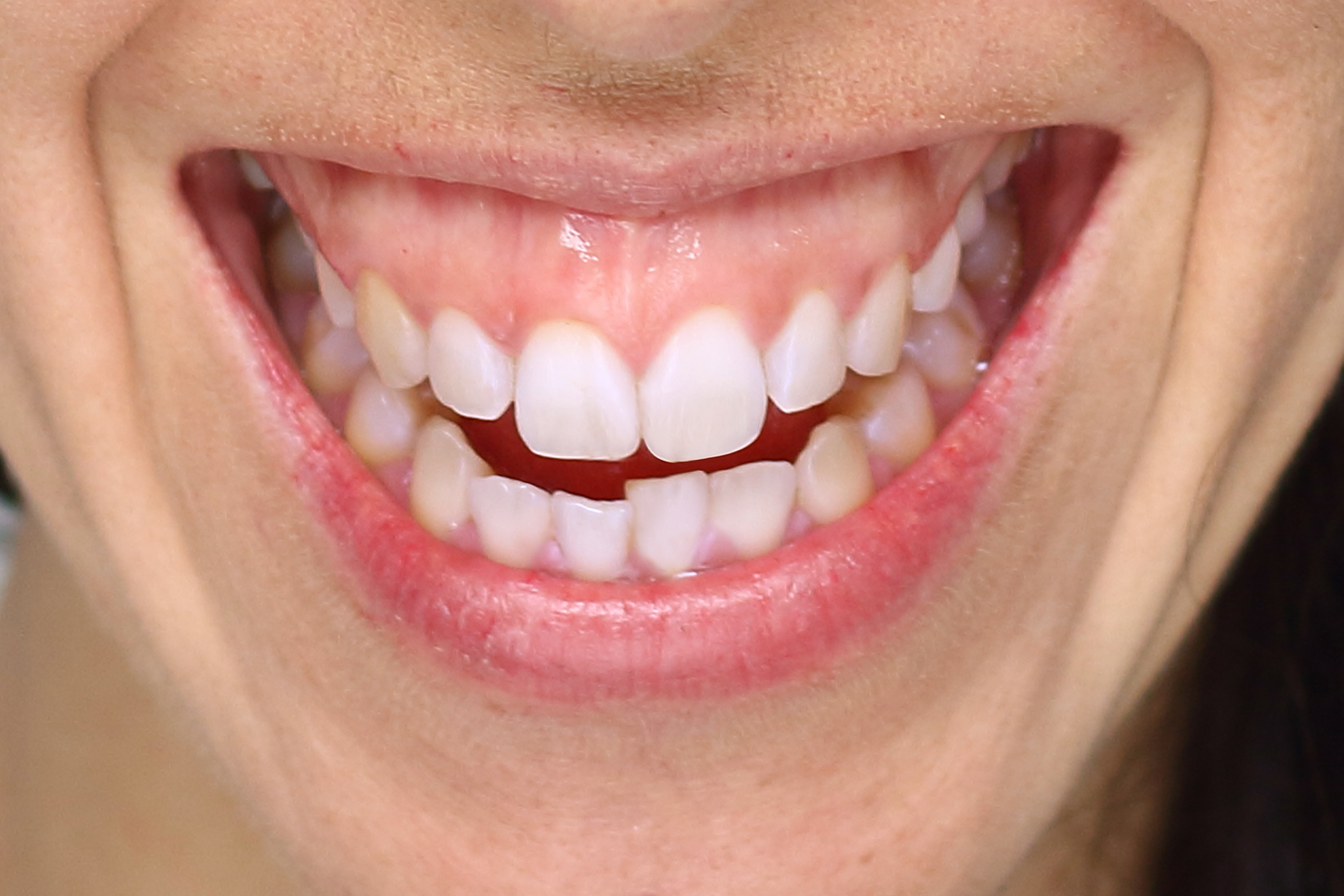
A gummy smile, medically called "excessive gingival display," shows more than about 3 millimeters of gum tissue above the upper teeth when you smile. It's common, it's rarely a dental problem on its own, and for many people it's something they've been self-conscious about for years without realizing a short in-office procedure can change it.
Botox injected into specific muscles of the upper lip temporarily reduces how far the lip travels when you smile, which reduces the amount of gum tissue that shows. At Redefine Dental in Dallas, Dr. Darya Timin uses 2 to 4 units per side in a 10-minute in-office appointment. Results appear in 7 to 14 days and last 3 to 4 months. Botox is one of three main gummy smile treatment paths (the others being gum contouring and orthodontic or surgical correction), and the right choice depends on what's actually causing the excess gum display in your case.
When you smile, a set of muscles in your upper lip pulls the lip up, away from your teeth. How far that lip travels depends on the strength and position of those muscles. For some people, the muscles are hypermobile, which means they pull the lip too high and expose more gum tissue than feels comfortable.
That's one cause. There are others, and the cause matters because it changes the treatment.
The three most common reasons for a gummy smile:
Most gummy smiles are caused by a combination of factors, which is why the first appointment at Redefine Dental isn't an injection. It's a diagnosis.
Botox is a neuromodulator. Injected into a specific muscle, it temporarily weakens that muscle's ability to contract. For gummy smile treatment, the target is usually the levator labii superioris alaeque nasi (LLSAN) muscle, which runs along the side of the nose and is responsible for pulling the upper lip up.
By slightly weakening that muscle, the upper lip doesn't travel as far when you smile. The teeth still show. The gum tissue shows less. The smile is still yours. It just shows a different amount of gum.
A typical gummy smile treatment uses 2 to 4 units per side, injected at precise landmarks. Compared to Botox doses used for crow's feet or forehead lines (often 10 to 20 units per area), this is a very small dose. Very little product, very specific target.
> "Injecting into the lip area for a gummy smile is different from injecting forehead lines. The margin for error is smaller. Too much product, or the wrong placement by a few millimeters, and the smile starts to look asymmetrical or the upper lip drops too much. I've had patients come in wanting a correction of Botox they'd gotten from an injector who was excellent at forehead work but hadn't specifically trained for smile anatomy. Dental training matters here because we know the underlying muscle structure of the face in a way most general aesthetic injectors don't."
This is one of the reasons Botox for gummy smile falls under a cosmetic dentist's scope rather than a med-spa. Dental anatomy training matters for the outcome.
Onset: You'll see full results in 7 to 10 days. Some patients start noticing a change in 3 to 4 days. Don't make judgments about the result in the first 72 hours.
Duration: Typically 3 to 4 months. Some patients extend to 5 or 6 months, especially after multiple treatment rounds (there's some evidence that repeat treatment extends duration as the muscle adapts).
Maintenance: Most patients return every 3 to 4 months for touch-ups. Some prefer to let it fully wear off between treatments and book as needed. Either approach works.
Recovery: None, functionally. You can go back to work immediately. We ask you to avoid lying down for 4 hours after the injection and to avoid rubbing the treatment area for 24 hours. That's it.
Side effects: Mild redness at the injection site for a few hours. Occasional small bruise. In rare cases, an asymmetric result that resolves as the Botox wears off or can be rebalanced with a small touch-up dose.
For patients whose gummy smile has multiple causes, combining Botox with gum contouring or with can produce a better result than either alone. That's determined at the consultation.
Many patients who come in for gummy smile consultations end up in conversations about more than just Botox. A smile is a system. The tooth color, the tooth proportions, the gum tissue symmetry, and how much gum shows are all elements of how the smile looks. Botox is one lever among several.
At Redefine Dental, a gummy smile consultation includes:
For some patients, the answer is Botox alone. For others, it's gum contouring alone. For a small percentage, it's both in combination, sometimes along with veneers if there are also tooth proportion issues at play.
Total chair time for your first Botox for gummy smile treatment: about an hour, spread across two appointments.
If you've been self-conscious about how much gum shows when you smile, the first step is a diagnostic consultation. Not every gummy smile is best treated with Botox, but for many patients, it's the simplest and most effective option.