


What Salivary Testing Actually Measures, and Why It Changes Treatment Plans
Services
March 31, 2026


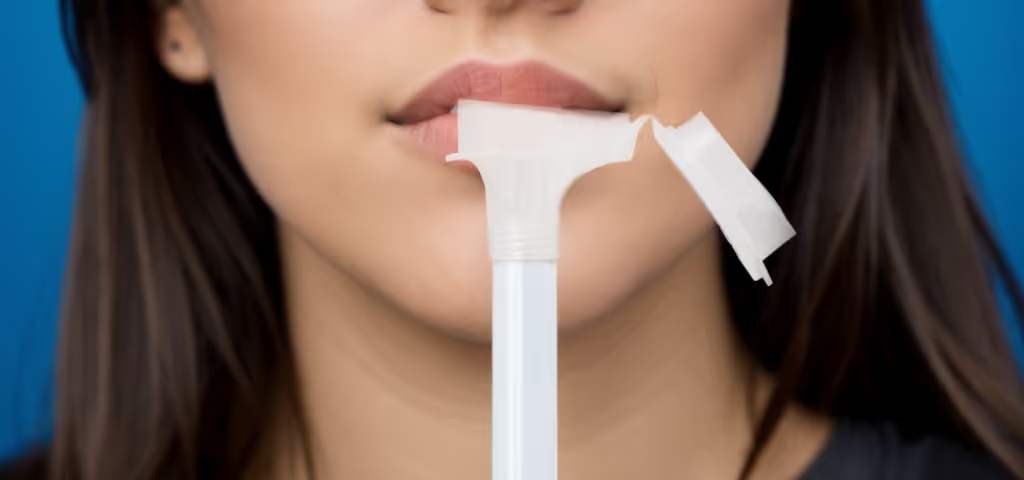
Every patient who walks into Redefine Dental thinks they floss well enough. Most of them don't realize their mouth is telling a different story. That's where salivary testing comes in. I started ordering these tests because I wanted a objective window into what's actually happening in the oral cavity before I make treatment recommendations. It changed how I think about prevention, how I counsel patients on risk, and which interventions actually matter for each specific person.
Salivary testing measures your bacterial load (specifically cariogenic and periodontopathic species), salivary pH, buffering capacity, and flow rate. The results show me your cavity and gum disease risk years before symptoms appear, so I can design a preventative plan that's personalized to your mouth, not generic.
When I look at a salivary test result, I'm reading your mouth's chemical and microbial composition. It's not vague. Here are the specific markers I'm looking at.
Bacterial load. The test counts two categories of bacteria I care about most. Cariogenic bacteria, primarily Streptococcus mutans, create the acid that decalcifies your teeth and causes cavities. Periodontopathic bacteria like Porphyromonas gingivalis and Aggregatibacter actinomycetemcomitans trigger the immune response that breaks down bone and gum tissue. High counts of either one shift my thinking. If you have sky-high Streptococcus mutans levels, a standard six-month cleaning isn't enough. We need to talk about diet, fluoride protocol, and how often you're actually brushing.
Salivary pH. Your saliva's acidity directly affects how fast bacteria colonize your teeth. A pH below 6.5 is acidic and favors cavity-causing bacteria. A pH above 7.5 is protective. This is not a binary good-bad marker; it's directional. Low pH patients need to think differently about acidic foods and drinks. I counsel them on timing and technique, not just frequency.
Buffering capacity. This is how quickly your saliva neutralizes acid after you eat or drink something acidic. Some people's saliva bounces back in minutes. Others need half an hour or longer. If your buffering capacity is slow, the preventative strategy changes. You might benefit from more frequent professional fluoride applications or a custom rinse protocol at home.
Salivary flow rate. Dry mouth isn't just uncomfortable; it's a risk multiplier. Low flow rates mean bacteria have fewer natural defenses. Your saliva is your mouth's built-in antimicrobial system. If you're not producing enough, we compensate with other tools.
Here's where it gets practical. Three things I think about once I have the test results.
One: I stop giving generic advice. Every patient used to get the same speech: brush twice a day, floss daily, see us every six months. Now I know which patients have bacterial populations so aggressive they need more aggressive intervention. For a patient with high Streptococcus mutans and low buffering capacity, recommending she wait six months between visits is not actually managing her risk. So I decided to recommend four-month intervals and add a prescription fluoride rinse. For another patient with a normal bacterial load and pH but slow flow rate, the strategy is different entirely. She needs saliva stimulation, not aggressive fluoride.
Two: I can quantify risk before something goes wrong. The test gives us language. I can show a patient her Aggregatibacter actinomycetemcomitans count and say, "This puts you at high risk for bone loss if we don't intervene now." That's not guessing. That's data. Some patients respond better to numbers than to fear. The test makes the invisible visible.
Three: I know whether my hygiene recommendations are actually working. A few patients ask me to repeat their salivary test one year or two years after we implement a new protocol. Did reducing acidic beverages lower the pH? Did the twice-daily rinse routine reduce Streptococcus mutans levels? If the numbers improved, we know the strategy is working. If they didn't, we pivot.
This is where I want to be explicit about how testing fits into the bigger picture. A salivary test is not a replacement for a cleaning. The test tells me what's growing in your mouth. The cleaning removes it. So I often combine them. If someone tests high-risk, I might recommend preventative dentistry that includes more frequent professional cleanings alongside the test results. For patients with advanced bacterial loads that suggest active periodontitis, I order a peridontal deep cleaning in addition to salivary testing to remove the bacterial biofilm from below the gumline.
The testing also informs scaling frequency. A low-risk patient can genuinely stay healthy on every-six-months maintenance. A high-risk patient might benefit from quarterly cleanings or a more rigorous at-home protocol with prescription products. I'm not just choosing a time interval blindly.
I see dentists (and plenty of wellness practitioners outside dentistry) over-interpret salivary testing. They frame it as magic predictive data. It's not. It's a risk marker, not a diagnosis. A high Streptococcus mutans count predicts cavity risk, but it doesn't mean you will get cavities tomorrow. Some patients with high levels never develop decay because they have excellent cleaning technique and diet discipline. The test is the beginning of a conversation, not the end of one.
I also see dentists in the Dallas area use these tests as a upsell tool, charging patients without explaining what the results mean or how it changes treatment. That's not why I do it. I use salivary testing because it gives me better information to make better recommendations. The test should cost less than the changed treatment strategy saves you in terms of future intervention.
If you've noticed that standard preventative care doesn't feel like it's keeping you ahead of cavities or gum recession, a salivary test might be worth discussing. It's a straightforward conversation at your next appointment. You'll collect a sample, we'll send it to the lab, and in about a week we have data we can act on. Start by scheduling a time to talk with our team about salivary testing and how it fits with your preventative dentistry goals. We'll review your risk profile and build a plan from there.