

Tim's Full-Mouth Reconstruction: From a Closed-Mouth Smile to Smiling With His Whole Face
Services
June 5, 2026


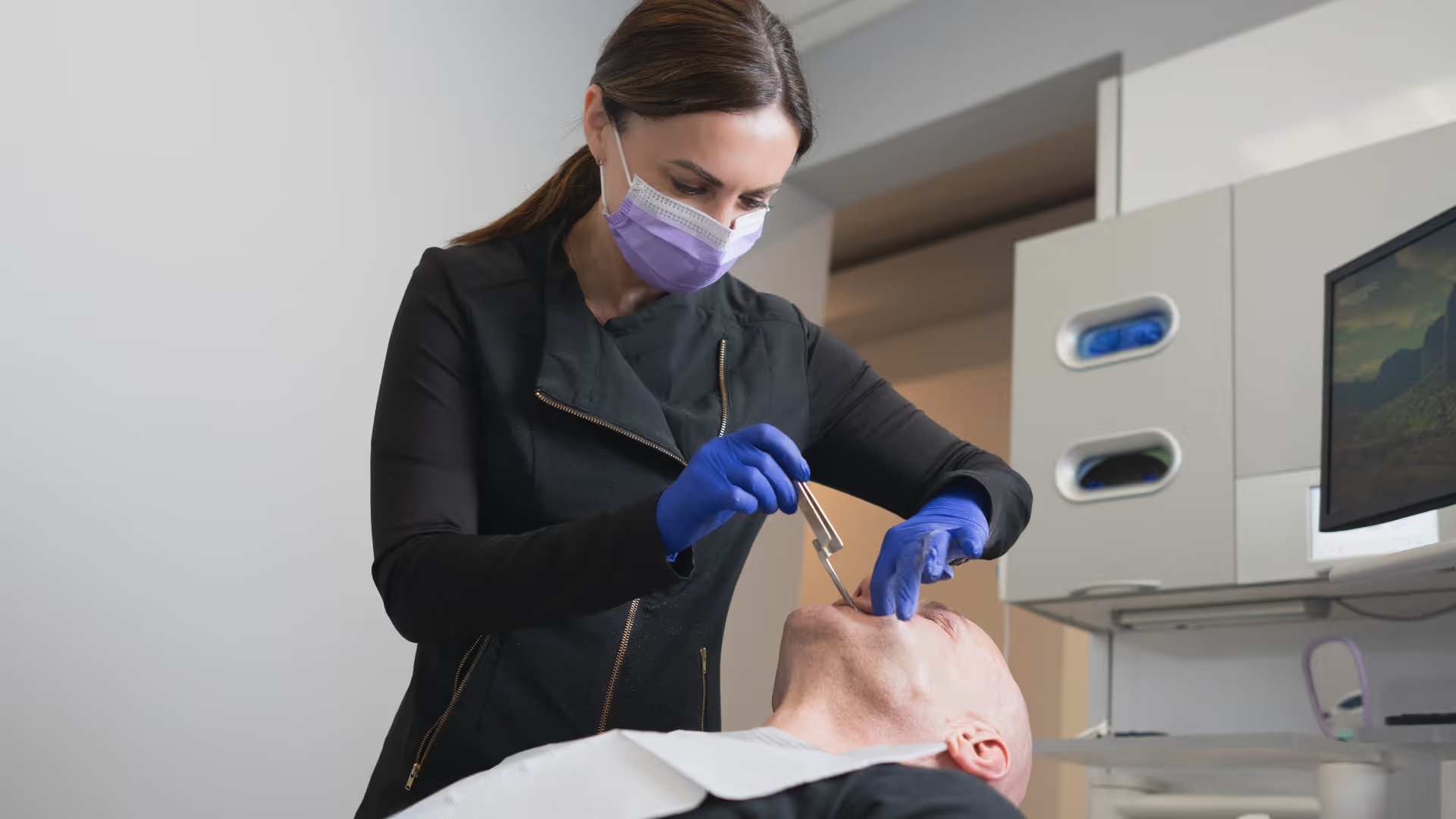
When Tim first came to see me, he had adapted so completely to his damaged teeth that he didn't even realize what he'd been missing. Years of grinding, acid reflux damage, and old dental work had worn his front teeth down to stubs. His cuspids were cracked. His bite had collapsed. And for decades, he'd trained himself to smile without showing teeth, to talk without revealing the extent of the wear. His closed-mouth smile had become second nature. But when we looked at his before photos together and compared them to pictures of him from his twenties, something shifted. He saw what I saw: that with the right plan, we could rebuild not just his teeth, but his confidence and his whole relationship with smiling.
Tim's full-mouth reconstruction involved restoring his vertical dimension with a combination of porcelain veneers and dental crowns, guided by bite analysis and a Kois-style risk assessment. The result: function returned first, aesthetics second, and the ability to smile with his whole face again.
When I review a new patient's photos and video, that's where the real diagnosis begins. I'm not looking at what's already broken. I'm looking at what the patient used to be, and what I'm working toward. In Tim's case, three things came into focus immediately.
One: His teeth had lost height. The acid reflux and grinding had worn his front teeth down by several millimeters. His central incisors, which should tower above his cuspids, were now shorter than everything around them. This isn't just an aesthetic problem. A collapsed vertical dimension changes how your bite closes, how your jaw muscles work, and how you can chew food properly.
Two: The wear pattern told a story of adaptation. His front teeth were flattened and worn. His back teeth showed cracking and old restorations struggling under bite force. His jaw had been working around this damage for so long that I needed to be careful about how we brought the bite back into alignment. A fast change can shock the system.
Three: He was smiling with only his mouth. His lips were tight, his facial muscles held back. When I pulled his photos from his twenties, the difference was unmistakable. He used to smile with his eyes, his cheeks, his whole face. That muscle memory was still there. I knew that if we got the bite right and gave him teeth he felt good about, that fuller smile would come back naturally.
Tim had already been to another dentist before he came to me. He left that appointment feeling lectured, overwhelmed by a big prognosis, uncertain if the work was necessary or just sales. When he came to Redefine Dental, he needed a different conversation. So I started with function, not aesthetics.
The first thing we did was bite analysis. I had to understand where his jaw wanted to close when his muscles were relaxed, not where they'd been compensating all these years. We used a Kois deprogrammer to find his true bite position, and we took diagnostic photos and scans from that position. That bite point became the foundation for everything.
Once I knew where his bite needed to go, I could plan the restorations. The vertical dimension needed to come up. His front teeth needed to be lengthened to their natural proportions. His back teeth needed to handle bite force without cracking. And all of it had to work as one system.
"Function first, then aesthetics" was the phrase I used with Tim, and it mattered. It meant I wasn't chasing a Hollywood smile that would wear down again in five years. I was rebuilding his bite so his teeth would stay intact, his jaw would stay comfortable, and his smile would be sustainable.
Full-mouth rehabilitation doesn't happen all at once. Tim's treatment was staged in phases, which served two purposes: it gave his muscles time to adapt to the new bite position, and it let us refine the aesthetic result as we went.
The restorations themselves were a mix of porcelain crowns on his back teeth, where bite force is highest, and porcelain veneers on his front teeth, where we needed to restore height and shape. Porcelain, not composite bonding, because it's more predictable under load and easier to keep clean long-term.
We also worked on TMJ treatment principles throughout. His jaw joint had been working around his bite problem for decades. As we corrected the bite, his muscles needed time to settle into a new pattern. This isn't something you rush.
And we discussed nighttime protection. Grinding had gotten him into this situation in the first place, so we planned for night and day guards as part of his long-term care. One restoration, no matter how beautiful, won't survive if the underlying habit isn't managed.
Treatment went well, but the real turning point came a few weeks after completion. Tim took a trip to Hawaii. He was sitting at a beachside dinner, and someone said something funny. He laughed without thinking. His whole face moved. His eyes crinkled. He smiled the way he used to smile in his twenties, before decades of wear and adaptation had made him choose a closed-mouth silence instead.
That's the moment he told me about. Not the day we delivered the restorations. The moment when his muscles remembered what a full, unselfconscious smile felt like. That's what full-mouth rehabilitation really is: not teeth, but the freedom to use your whole face again.
Before we started, Tim had three specific concerns. He was worried his teeth would look too white, too big, or too obviously "done." These are the right worries. A smile that looks dramatically altered reads as fake, no matter how beautiful the individual teeth are.
So we used his own photos from his twenties as the reference. We matched his tooth size, his shade, his proportions to who he used to be. The goal wasn't transformation. It was restoration. When his friends saw him after treatment, they didn't say, "You got your teeth done." They said, "You look like yourself again."
If you've been grinding or experiencing wear, or if you've adapted to a bite problem the way Tim did, the first step is photos and conversation. Bring me images of yourself from ten or fifteen years ago if you have them. They're one of my most important diagnostic tools.
At Redefine Dental, we'll start with function. We'll do bite analysis and risk assessment. We'll show you what we see and explain our thinking, not lecture you. Then we'll build a sustainable plan that gives you back not just teeth, but the confidence to smile the way you want to.
If full-mouth rehabilitation feels like the right next step, we can talk about timing, about phasing, about how we'll protect your long-term result. But we start with what you need, not what's flashy. That's how you end up like Tim, smiling with your whole face again.