

Veneers vs Bonding: How I Actually Decide Which One to Recommend
Opinion
February 24, 2026


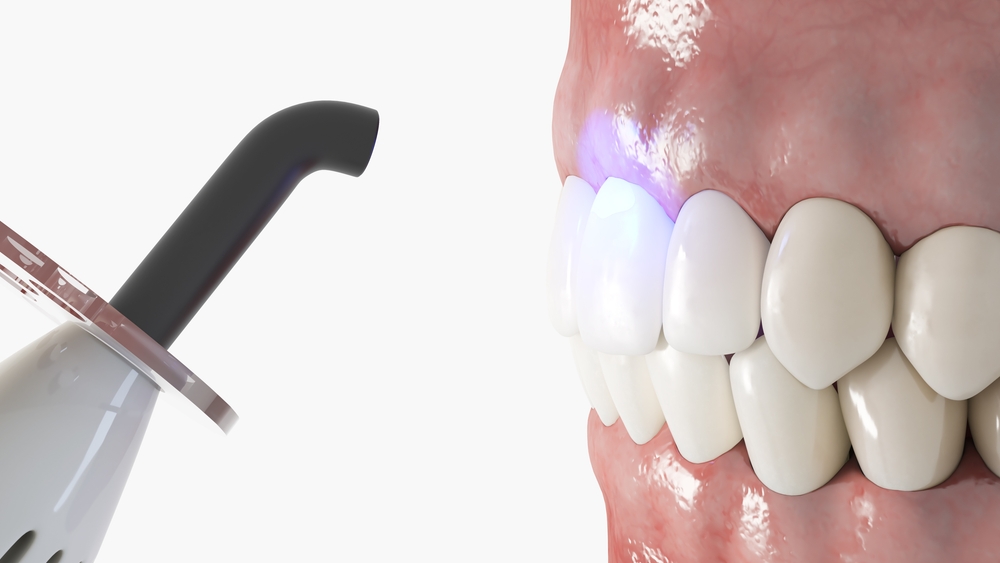
Patients come in asking for bonding all the time. Sometimes I say yes. Sometimes I sit them down, pull up their photos, and explain why I think porcelain veneers would hold up better over the next 15 years. It's never a one-size answer. Here's how I actually work through the decision, with a real case from my practice where bonding would have worked, but we went with veneers for three specific reasons.
Cosmetic bonding uses a tooth-colored composite resin shaped and cured directly on your tooth in a single visit. It's faster, cheaper, and more conservative. Porcelain veneers are custom-made shells of dental porcelain bonded to the front of the tooth over two to three appointments. They're more durable, hold their color better, and handle larger changes in shape and width more predictably. The right choice depends on the size of the change, your hygiene habits, and what you want the restoration to look like in 10 or 15 years.
A lot of what's written about veneers vs bonding frames it as a cost decision. Bonding is cheaper up front. Veneers last longer. Pick your trade-off.
That's not wrong, but it's not how I actually work through the decision in my chair. When a patient asks me which one is right for them, I'm not thinking about cost first. I'm thinking about three specific things, and I'm thinking about them in a specific order. Cost is a factor, but it's not the first factor.
Bonding is excellent for small changes. A chipped corner. A single gap between two teeth. A slight shape adjustment on one tooth that doesn't match the one next to it. Small, focused work.
When the change gets bigger, bonding starts running into a physical problem. Composite, to look right and hold up, can't be too thick. The thicker the bond of composite, the more likely it is to discolor unevenly, chip at the edges, or look bulky when a patient smiles. You can get away with it in small areas. In large areas, the tooth ends up looking too thick or looking fine at first and then deteriorating faster than you'd want.
A case I worked on a few months back is a clear example of this. A young patient came in asking for bonding. When we looked at his photos together, the first thing I noticed was the spacing. Not a little spacing between two teeth. Large spacing across the upper arch. Multiple millimeters between multiple teeth.
Bonding could have closed the spaces. But to close spaces that large, the composite buildup on each tooth would have to be thicker than I was comfortable with. The teeth would have looked bulky. And as he smiled and talked over the next years, the composite was going to wear unevenly along the edges where it met his natural tooth. The chance of chipping along those large bonded edges was high.
Porcelain gave us a better answer. Custom-made veneers could close the spaces with a consistent thickness that matched his natural tooth proportions. The edges are bonded to the tooth in a way that's less prone to chipping. The color stays stable over years. For the size of the change he wanted, porcelain was the more predictable material.
That's the framing I use: how big is the change, and does the material I'm using handle that size of change predictably?
This is the factor most cosmetic dentists don't bring up, and it's a meaningful one.
When we close large spaces with bonding, the area where the composite meets your tooth and the area between your teeth (the interproximal space) can become harder to clean. The composite has microscopic surface roughness that attracts plaque more than porcelain does. If you're a diligent flosser who sees your hygienist every 3 to 6 months, this is manageable. If you're not, the composite at the gum line can start to stain or develop decay around the edges within a few years.
Porcelain is denser and smoother at the microscopic level. Plaque doesn't adhere to it the same way. Hygiene access, when designed well, is easier to maintain.
For that young patient with the spacing, his hygiene habits were good but I also wanted to set him up for success over 20 or 30 years of wearing the restoration. Porcelain was easier for him to keep clean over time, especially with large-area restoration in place. That was the second reason we went with porcelain.
This one is about aesthetics and it's subtle.
When a tooth is too narrow, too short, too uneven, or needs to be wider to match the rest of the smile, bonding has to add material. And when you add enough composite to make a real shape change, you often end up with a tooth that's thicker than it should be. The tooth looks different from the adjacent teeth when seen from the side or in a three-quarter view, not just head-on.
Porcelain veneers are fabricated to precise dimensions in a lab before they ever touch your mouth. Width, length, and thickness are all controlled to match the overall smile design. In cases where shape needs to change meaningfully, porcelain gives a more proportionate result.
For patients who don't need meaningful shape change (you're fixing a small chip, closing a single small gap, evening out a slight discoloration on one tooth) this factor doesn't matter. Bonding is fine. For patients where multiple teeth need to be reshaped or proportions need to shift, porcelain is the more predictable choice.
All of the above is not me arguing that bonding is a bad option. Bonding is excellent when it's the right answer. Here are the cases where I usually recommend it:
In those cases, bonding is the right answer and it's what I recommend.
This is the harder conversation, and the one patients deserve to have clearly:
In those cases, I usually explain that bonding could be done, but the result would likely need to be redone or would start to look visibly older within a relatively short window. Many patients hear that and decide the porcelain investment makes sense for them. Some decide to start with bonding anyway, with a plan to upgrade later. Both are valid choices. It's my job to make sure the patient knows the trade-off before they pick.
| Factor | Porcelain Veneers | Cosmetic Bonding | |---|---|---| | Material | Dental porcelain (typically lithium disilicate or feldspathic) | Composite resin | | Appointments | 2 to 3 | 1 | | Time per appointment | 60 to 90 minutes | 30 to 60 minutes | | Cost | Higher up-front | Lower up-front | | Longevity | Typically 10 to 15+ years | Typically 4 to 8 years | | Stain resistance | Excellent | Moderate (can pick up coffee, tea, wine over time) | | Reversibility | Requires light tooth preparation; not fully reversible | More conservative; usually reversible | | Ideal for | Larger changes, multiple teeth, long-term aesthetic goals | Small changes, single teeth, conservative first steps | | Chair-side adjustments | Minimal; the shape is pre-designed | Fully hand-shaped during the appointment |
Sometimes the right answer is both, or both at different times.
I've had patients start with bonding on one or two teeth to address an immediate issue, and then convert to porcelain veneers across a broader range of teeth a few years later as part of a smile makeover. That's a perfectly fine path. The bonding serves a purpose in the short term, and the veneers come later when the patient is ready for the bigger project.
I've also had single-appointment cases where we do bonding on one tooth because it doesn't make sense to order a single veneer for a minor issue, and leave the rest of the smile alone because it's healthy and doesn't need intervention.
The decision isn't always all-or-nothing. It's almost always about what specific problem we're solving on which specific tooth.
If you come to Redefine Dental for a cosmetic consultation where bonding or veneers could be the answer, we do the same three-question process I described above, using your photos. You'll leave with:
If I'm recommending porcelain and you're not sure it's the right choice for you, we'll talk through it. If I'm recommending bonding and you want to understand why I'm not suggesting veneers, we'll talk through that too. The decision is yours. The clarity about why is my job.
The most useful thing I can tell you before your consultation: come in without assuming you know what you want. A lot of patients come in convinced they want veneers when bonding would serve them better, and a lot come in asking for bonding when their case really calls for porcelain. The conversation we have at your consultation, using your own photos and your own dental history, is what produces the right answer.