


Why I Test for Specific Bacteria Before Recommending Veneers
Opinion
May 22, 2026


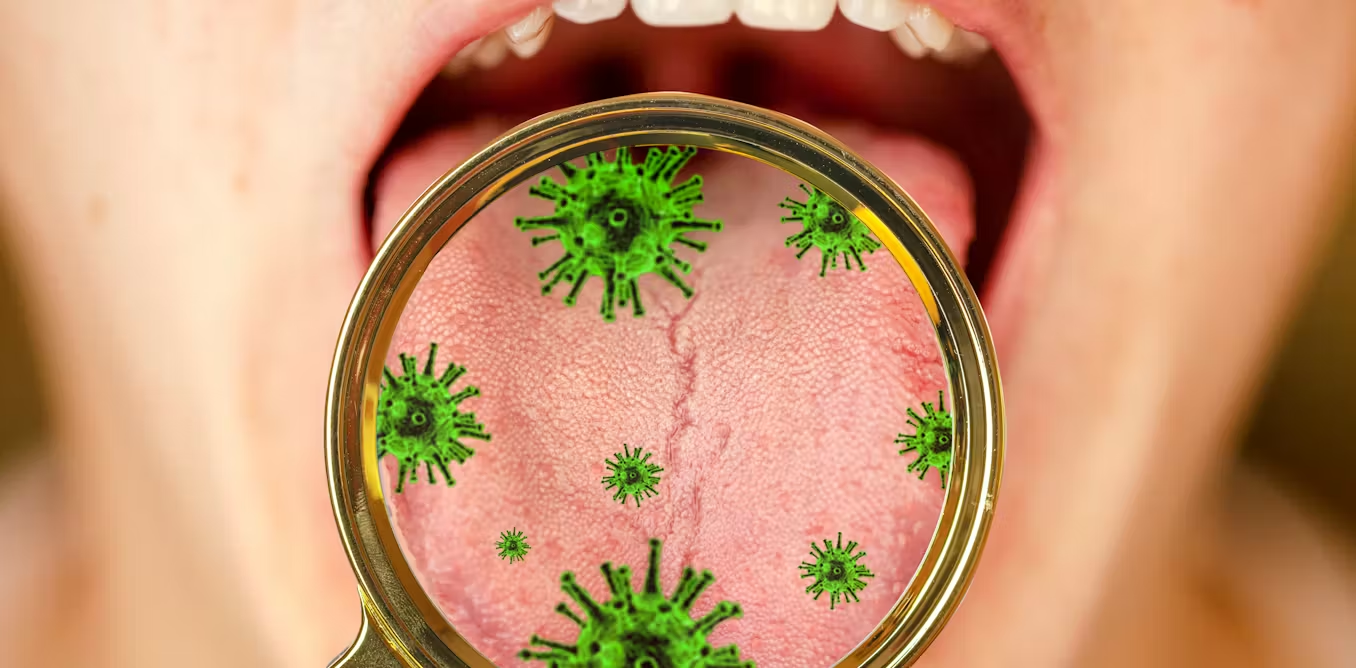
I see the look on people's faces when I tell them we need to run a salivary bacterial panel before placing veneers. Confusion, sometimes frustration. "I just want my smile fixed, Dr. Timin. Why are we talking about bacteria?" That question comes up in almost every cosmetic consultation I do in Dallas, and the answer is exactly why I'm writing this: most cosmetic dentists, even excellent ones, don't think about the bacterial environment before they prep teeth for veneers. I do. And it's changed how long my restorations last and how happy my patients are five years after treatment. Here's why.
Placing porcelain veneers on a patient with untreated high bacterial load (especially pathogenic species like *Streptococcus mutans* or *Porphyromonas gingivalis*) is like painting over wood rot. The bacterial environment around the veneer margin controls how long the restoration lasts. I run salivary testing before every cosmetic case because the biology matters as much as the artistry.
When a patient tells me they want veneers, my first thought is not about shade or shape. It's this: "What am I protecting, and from what?" A veneer is a thin shell of porcelain bonded to the front of the tooth. It's beautiful, predictable, and minimally invasive. But the bond line, where that veneer meets the tooth structure, is also the place where bacteria can do the most damage. If the patient's mouth is swimming in cavity-causing pathogens, that margin becomes a weak point.
I had a patient four years ago, a Dallas banker in his fifties who got veneers from another practice. He had them for six years, and then, one by one, they started failing. He'd come in with a veneer that seemed loose. When I examined it, I found marginal decay around three teeth. The veneer itself was beautiful, but the tooth underneath had been compromised by decades of high caries risk that nobody had addressed. So I decided to do something different in my practice: before I ever prepare a tooth for a veneer, I know what I'm working with biologically.
One. What bacteria are actually in this patient's mouth right now?
Salivary testing tells me three key things: how much cavity-causing bacteria (*S. mutans*) they harbor, how much periodontal pathogen (*P. gingivalis*) is present, and what their buffering capacity is. These aren't theoretical numbers. They predict risk. A patient with a high *S. mutans* count has a different veneer timeline than someone with a low count, even if they both have a beautiful smile design on their mind.
I also look for lactobacilli levels and yeast species. Some patients have dysbiotic oral flora that shows up immediately in a saliva culture. These details change what I'm willing to place and when.
Two. Will veneer placement make the bacterial problem worse?
Here's something most cosmetic dentists won't say: a veneer can trap bacteria if the bond fails, even slightly. If I prep a tooth and place a veneer on someone with a high bacterial load and poor home care, I've created a perfect hiding place for the very organisms that will eventually compromise the restoration. So I decided to make this part of the consultation: "Here's what your saliva tells us. Here's what we need to address before we beautify." Sometimes that means periodontal deep cleaning first. Sometimes it means shifting the patient from porcelain veneers to cosmetic bonding if the risk profile is really high and we can't reduce bacterial load quickly enough.
Three. What's the baseline for success five years from now?
I think about marginal health at decade-long intervals. A veneer placed today should look and feel flawless in 2031. That doesn't happen by accident. It happens because the biology was right, the bonds were right, and the patient understood what we were protecting. I've had patients ask, "Does this really add months to the timeline?" Yes, sometimes. If someone has a *P. gingivalis* count that tells me they have active periodontal disease, we're treating that first. It's not negotiable. The veneer waits.
When I get salivary culture results, I'm watching for three threshold scenarios:
**High *S. mutans* (caries risk).** This patient has cavity-prone saliva. Their carbohydrate metabolism favors cavity organisms. Before veneers, I want to see them on a proactive hygiene protocol, possibly xylitol therapy, and I'm more likely to recommend bonded restorations over veneers for some teeth, depending on the caries pattern. A patient with high mutans count gets three months of aggressive prevention before I place anything cosmetic.
**Elevated *P. gingivalis* (periodontal risk).** This is the bacteria most strongly associated with chronic periodontitis. If someone has active *P. gingivalis* and bleeding gums, veneers are off the table until we treat it. I refer for periodontal deep cleaning and we retest in six weeks. Sometimes this timeline extends the veneer case by three months. That's exactly what should happen.
Mixed dysbiosis. Some patients show high counts of multiple pathogenic species at once, often with low protective organisms like *Streptococcus sanguinis*. These patients usually have poor oral hygiene habits. I'm honest with them: we can build you a beautiful smile, but you've got to change the foundation first. Sometimes they're ready. Sometimes they're not, and I'd rather tell them that now than place veneers on a biological time bomb.
"Dr. Darya, why does this add weeks or months? I just want veneers." Here's my answer, and it's the honest one: because veneers are expensive, they're permanent in some ways, and they fail silently. You don't know your margin has broken down until the tooth underneath is already rotted. By then, we might not be able to save the tooth, and we're replacing the whole thing. If we spend six weeks getting your mouth ready now, your veneers stay beautiful for ten years instead of six. That math was worth it to me when I trained at the Kois Center, and it's worth it now. Function first, aesthetics second.
I had a patient ask me this exact question two years ago. She was eager, wanted to look perfect for a wedding in three months. Her saliva test showed high mutans and some *P. gingivalis* activity. I explained the timeline. She pushed back. I held the line. We did three months of treatment (hygiene intensification, deep cleaning, re-testing), and then we placed her veneers two weeks before the wedding. She looked stunning. And three years later, she's told me multiple times that those veneers feel like they'll last forever. That matters to me.
This approach isn't new. It's embedded in the Kois Center philosophy I trained in, which prioritizes biological stability and functional design before aesthetic refinement. Too many cosmetic dentists in Dallas flip that order. They ask, "How do we make this smile perfect?" first and "How do we keep it healthy?" third. I reverse it.
Salivary testing is part of that reversal. So is asking about gum tissue symmetry, about whether the patient bruxes at night, about their home care habits. It's also why I might recommend cosmetic bonding instead of veneers for some cases, even when veneers would look better initially. Because I'm not thinking about the photo you'll show your friends tomorrow. I'm thinking about the smile you'll still have in 2035.
If you're considering cosmetic dentistry in Dallas and you've heard the term "salivary testing" and wondered what it has to do with your smile, this is the answer: it has everything to do with it. Not every Dallas cosmetic dentist will recommend it. Many will proceed straight to veneer prep. But Redefine Dental uses salivary testing in our cosmetic cases because the biology determines the durability.
If you're ready to explore veneers or other smile restorations with someone who thinks about the bacteria first, schedule a consultation. We'll run the test, talk through the results, and build a timeline that protects your investment. Your smile five years from now will be worth the extra weeks we spend getting your mouth ready today.




.jpeg)