


Signs of Nighttime Teeth Grinding You Might Be Missing
Health
March 6, 2026


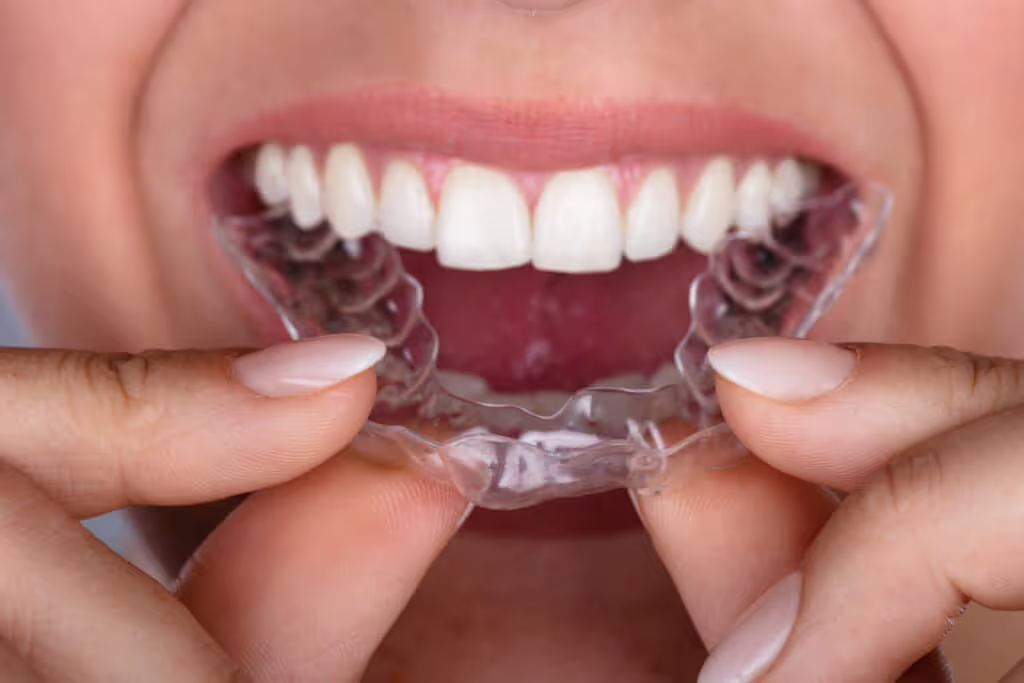
Most people learn they grind their teeth at night because someone sleeping next to them hears it. That's not the only signal. By the time a partner has heard enough to mention it, the grinding has usually been going on for months or years. Your body, your jaw, and your teeth give you earlier signs. Here's what to watch for, and why catching nighttime grinding early matters.
Nighttime bruxism (grinding or clenching your teeth while you sleep) is common and often silent. You don't need a partner to confirm it. A combination of waking up with a tight or sore jaw, morning headaches concentrated at your temples, increased tooth sensitivity, visible flattening or chipping on your front teeth, and unexplained facial muscle fatigue are the typical early warning signs. Untreated bruxism wears down tooth structure over time, contributes to TMJ disorder, and can worsen headaches. A dental exam can often confirm grinding based on wear patterns alone, before you've noticed the symptoms yourself.
About 10% of adults grind their teeth at night, and many more clench without audible grinding. Some people grind silently. Some clench so tightly that the teeth barely move against each other, producing no sound at all. If you sleep alone, or if your partner sleeps deeply, the behavior itself stays invisible.
The signs show up in your body instead. Here are the ones most often missed.
If the muscles along your jawline feel sore, stiff, or fatigued when you first wake up (and the soreness tends to improve as the day goes on), nighttime clenching is a common cause. Those muscles (the masseter especially) have been contracting throughout the night. They're tired in the morning in the same way your legs would be if you'd done squats for hours.
This symptom can be subtle. Some patients describe it as "my jaw feels heavy in the morning." Others notice it as a specific tightness that goes away after a few cups of coffee. Either description is worth paying attention to.
Tension headaches centered at the temples or at the back of the head, present on waking and often fading as the morning progresses, are a frequent sign of nighttime parafunction (grinding or clenching).
The temporalis muscle runs along your temple and is part of your chewing system. When you clench at night, it contracts along with your masseter, and it expresses fatigue as a dull headache.
Patients often attribute these headaches to stress, sleep quality, or dehydration. Those can be factors. But a headache that's consistently present at wakeup and consistently resolves by late morning is worth asking a dentist about.
The temporomandibular joint sits just in front of your ears. Chronic pressure on the joint from nighttime grinding can produce an aching sensation near or inside the ear area that isn't infection and doesn't respond to ear-related treatment. Patients sometimes see ENT specialists for this and come back without a diagnosis. A dental exam often identifies it as TMJ-related.
Your teeth leave physical evidence. A dentist can often see nighttime grinding in your mouth before you've felt the symptoms yourself.
Your upper and lower front teeth should have subtle textures and edges. When you grind at night, those edges get flattened over time. The incisal edges (the biting edges of your front teeth) become straight across rather than gently curved. Chips along the edges of the teeth become more common.
In severe cases, the teeth become visibly shorter. Some patients with longstanding bruxism have lost 10 to 20% of their original tooth length from wear. This is slow enough that they don't notice it happening, and usually don't realize it until a dentist points it out.
Enamel, the hard outer layer of your teeth, gets worn thinner by chronic grinding. The dentin underneath, which has microscopic tubules leading to the tooth nerve, becomes more exposed. The result is increased sensitivity to hot and cold, sometimes without any obvious cause.
If you've noticed drinking cold water or eating ice cream has become uncomfortable in the last year or two, and nothing else in your dental hygiene has changed, grinding is a possibility.
Sometimes visible only in certain lighting or under magnification, these small cracks run vertically in the front teeth and are a result of repeated flex and pressure from clenching. They don't usually require treatment themselves, but they're a signal that the teeth are being asked to handle more force than they're designed for.
If you've noticed that your tongue has visible indentations along its edges (often called "scalloped tongue") or that the inside of your cheek has a linear ridge at the level of your bite line, you're likely pressing your teeth against those surfaces repeatedly, often at night. These are both signals of chronic clenching.
> "A common scenario in my practice: a patient comes in for a cosmetic consultation, wanting veneers or bonding on their front teeth because they feel their smile has gotten shorter over the years. When we look at the photos, the wear pattern is classic bruxism. Before I talk about cosmetic work, I have to address the cause. Placing new porcelain on top of teeth that are still being ground against each other every night is a recipe for fractured restorations. The grinding has to be controlled first, which usually means a night guard and sometimes a Botox conversation, before we can do the aesthetic work safely."
If you've considered cosmetic dentistry to address teeth that look shorter than they used to, a bruxism evaluation should come first.
Even though the grinding is happening at night, the effects can carry into daytime. Jaw fatigue during meals, especially chewing anything firm (steak, bread crust, raw vegetables), can be a sign that your jaw muscles are chronically worked.
Patients with chronic grinding sometimes describe their bite feeling like it's changed, or like their teeth aren't hitting the same way they used to. Wear changes the contact points between the upper and lower teeth, and the bite shifts subtly over time. This can lead to uneven pressure, TMJ irritation, or a general sense that something in the mouth isn't quite right.
Bruxism is often correlated with stress. Many patients notice that periods of higher stress correlate with more intense morning symptoms. This is useful information both for self-awareness and for a dentist evaluating the case.
If two or more of the signs above describe your experience, the next step is a dental evaluation. Here's what happens at Redefine Dental:
A custom-fitted hard acrylic night guard worn during sleep protects your teeth from wear and often reduces the intensity of clenching by giving your bite a predictable surface to rest against. This is very different from the soft, over-the-counter guards available at pharmacies. Those are usually too soft to protect meaningfully and sometimes make clenching worse. A custom-fit hard night guard is the first-line dental treatment and helps most patients significantly.
Read more about .
For some patients, bruxism is partly driven by a bite that isn't hitting evenly. Small adjustments to smooth out high contact points can reduce the muscle signal that drives clenching.
For patients whose grinding is correlated with mild or moderate sleep apnea or upper airway resistance, addressing the airway issue often reduces the clenching. This may involve a sleep study and, depending on results, an oral appliance for sleep apnea or (in more significant cases) CPAP. See .
For patients with confirmed muscle-driven bruxism, Botox injected into the masseters can reduce the force of clenching. This is one tool among several, and I wrote more about how it fits into a full TMJ plan in .
Not a dental treatment, but not nothing. For patients whose bruxism correlates with stress, sleep quality improvement, stress management, and addressing underlying anxiety can reduce nighttime clenching.
If you've recognized yourself in several of the signs above, a bruxism evaluation is a low-friction appointment that can prevent significant dental damage over time. It's usually a single appointment to diagnose and begin treatment.