

How Many Visits Do Porcelain Veneers Take? The Four-Appointment Plan
Services
June 19, 2026



Your teeth look yellow no matter what you try, the old fillings up front have gone dark, and porcelain veneers keep coming up. Then the practical worry sets in. How many visits do porcelain veneers take, how many mornings will you have to clear, and will you spend the time in between with teeth that look half finished? You want to know what you're signing up for before you sit down in anyone's chair.
Porcelain veneers take four visits at Redefine Dental Aesthetic and Wellness Center. How long each appointment runs depends on how many teeth we're treating. Across those four visits, three things happen in a fixed order. I start with photos of your smile, then show you a preview of your potential new smile on screen before anything is done. Next, you wear temporary veneers to test the look, the length and how they feel when you talk and eat. Only then is the final porcelain made in a lab and bonded in place. You approve the design twice, once on screen and once in your own mouth, before anything is final.

I get asked some version of "can't we just do it in a day?" more than almost anything else about veneers. I understand why. Nobody wants to keep rearranging their calendar.
Here's the reason it takes four. Each porcelain veneer is custom-made in a dental lab to fit one specific tooth. The lab builds the porcelain so it has the same slight see-through quality at the edge that natural teeth have. That work happens outside the office, between your appointments, and it can't be rushed without the result looking flat.
The second reason is that I want you to live with the new smile before it's permanent. A design that looks lovely on a screen can feel too long when you say an "f" or "v" sound, or catch your lower lip when you smile wide. The only way to find that out is to wear it. So the plan builds in that test run on purpose.
Four visits is the number for traditional porcelain veneers. No-prep veneers take three, but they're right for a narrow set of teeth, and they're wrong for many people who ask for them by name. If your teeth sit in a good position and mostly need a color change, we'll talk about whether no-prep fits. If old fillings, dark edges or uneven lengths are part of the picture, the four-visit plan is usually the one that gives a natural result.
The visit count only holds if the foundation is ready. Before I map out a veneer plan, I look at three things.
1. Your gums. If your gums are red, swollen or bleeding when you brush, that comes first. Veneers placed against inflamed gums tend to pull plaque into the edge, and a few years later you see a dark line where the porcelain meets the gum. It's never just the gums, either. Bleeding gums are an open door: the bacteria and inflammation there are linked to heart disease, diabetes and other problems in the body. When the gums need help, a deep cleaning with salivary testing settles them down first, and the veneer plan starts once the tissue is healthy.
2. Your bite and any grinding. Grinding and clenching put force on your teeth all night, and over time that can lead to worn, cracked or loose teeth. Porcelain takes that same force. So I look at how your upper and lower teeth meet, where the edges are worn flat, and whether your jaw muscles look overworked. If you grind, a custom night guard protects the new veneers while you sleep.
3. How much healthy tooth you have. I want to remove as little of your natural tooth as possible. Sometimes the right answer for a tooth is to leave it alone. Old fillings that have gone dark, a crown that no longer matches, or enamel that's worn thin at the edges all change how much each tooth needs, and that's what decides how many teeth go into the plan.
The appointments follow the work, and the work always moves in the same order.
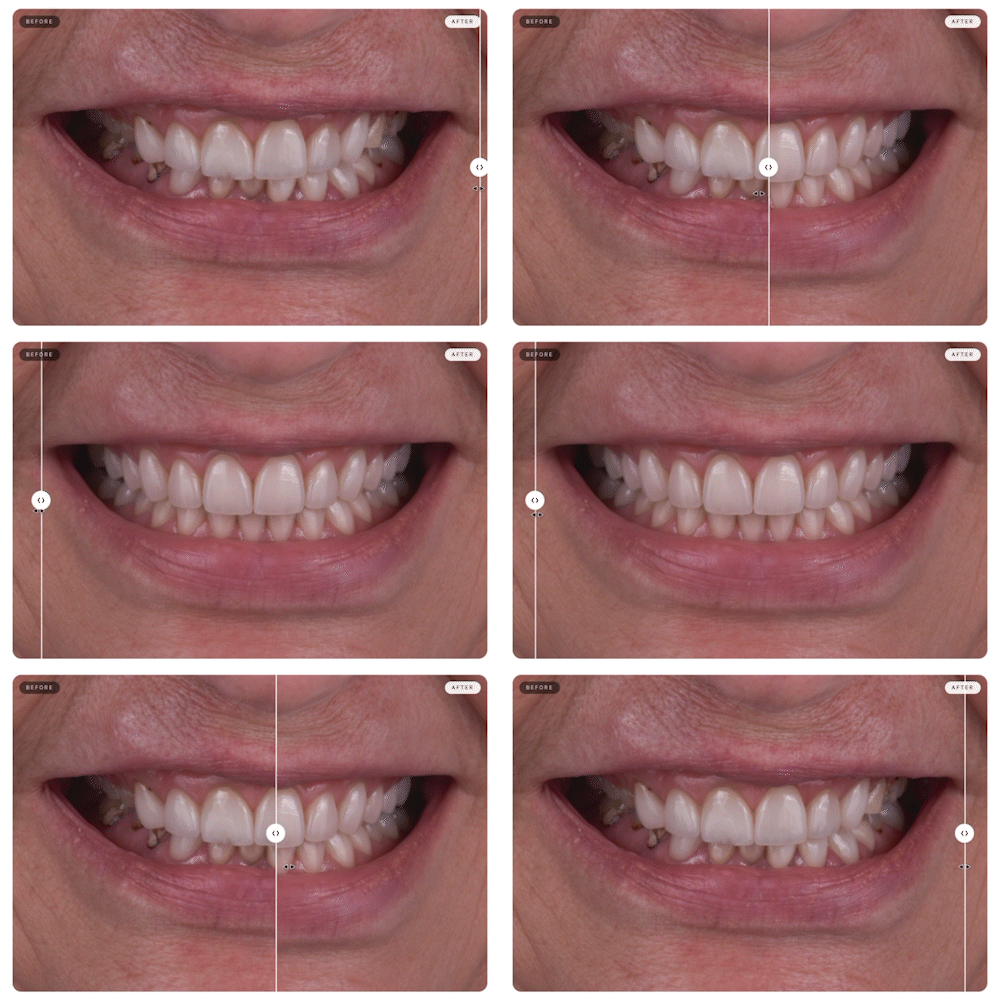
It begins with planning. I take photos of your smile and your face, and old pictures of you help when you have them, because they show what your teeth looked like before wear and darkening set in. I run the photos through smile design software, and you see a preview of your potential new smile on screen. This is the point to tell me "a little shorter" or "not that white." It's a preview, not a promise, and it's where most of the decisions get made.
Then the teeth are prepared. A thin layer of enamel comes off the front of each tooth so the veneer can sit flush instead of bulging forward. The shape of your prepared teeth is recorded and sent to the lab.
Then you wear temporary veneers. This is your test drive. You see the new length and shape in your own mirror, at your own dinner table, at work, in photos. You notice how they feel when you talk and eat. If something feels off, we change it at this stage, and the lab builds the final porcelain from what you've approved.
Last, the final veneers are bonded. Your teeth are cleaned, each veneer is checked for fit and color, and then it's bonded in place. I check your bite carefully before you leave so the new edges meet the way your teeth should.
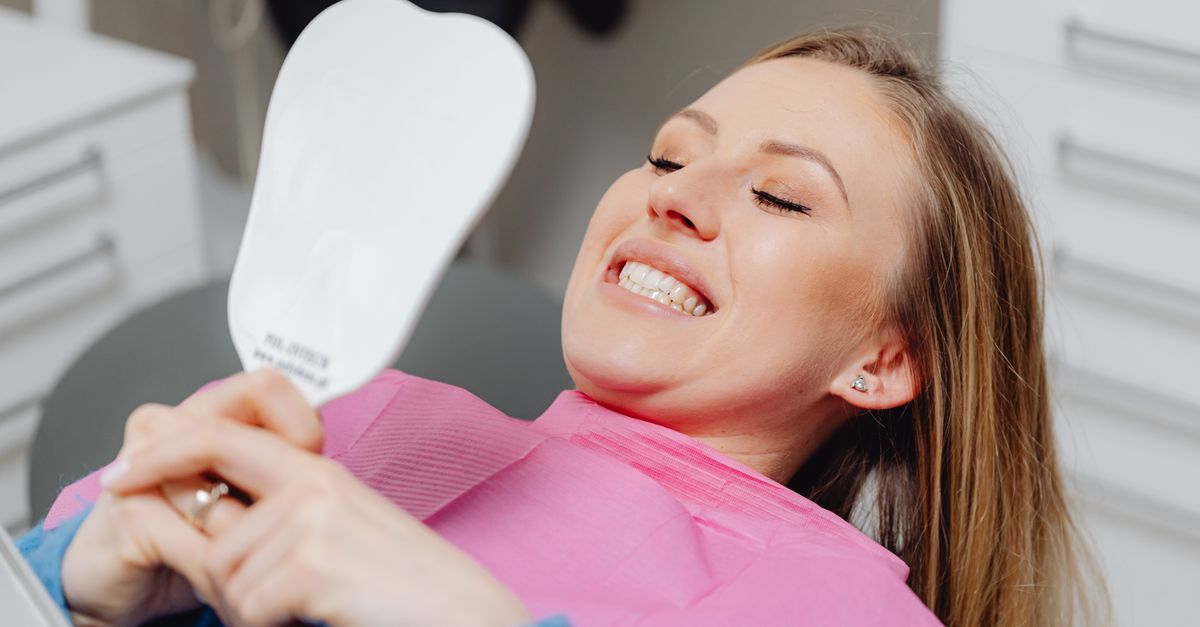
When we're treating eight or ten teeth, appointments run longer. If long visits make you anxious, we have sedation options: nitrous oxide (laughing gas), oral conscious sedation (a pill taken before the visit) and IV sedation. We'll talk through which one makes sense for you. If you're wondering what the preparation itself feels like, I walk through it in what to expect before, during and after veneers.
This is the fear I hear most from women who've waited years to fix their smile. They don't want to look "done." Too white, too thick, every tooth the same flat rectangle.
Three things keep veneers looking like teeth. The porcelain has to be thin enough that light passes through it and bounces off the tooth underneath, the way it does through natural enamel. The tooth color has to suit your skin and the whites of your eyes, not the whitest option in the box. And each tooth needs its own small differences in shape and length, because natural front teeth are never identical.
The four-visit plan is how I protect all three. You see the design on screen, then you wear it as temporary veneers, and only then does the lab build the final porcelain. By the time your veneers are bonded, you've already lived with the look. Nobody should be able to tell you have veneers. They should just think you look rested.
Porcelain doesn't decay, but the tooth around it can. You can still get cavities under or around a veneer, usually right at the edge where veneer meets tooth. That edge is where my attention goes at every checkup.
If you're living with dry mouth, tell me. Some medications reduce saliva, and less saliva means less protection for the natural tooth at each veneer's edge. That's part of the whole-body picture I want to see before and after treatment.
Porcelain veneers are $3,135 per tooth. Each veneer is custom-made in a lab for that one tooth, so the fee is per tooth and the total follows how many teeth we treat: 6 teeth is $18,810, 8 teeth is $25,080, and 10 teeth is $31,350. Once we agree on how many teeth belong in the plan, you'll know the total before any tooth is prepared.
We file the claim with your insurance for you, so if your plan has out-of-network benefits, you can use them. Medicare and Medicare Advantage plans with out-of-network benefits are accepted the same way, and HSA and FSA cards work too. You can also split treatment into monthly payments through Cherry. If you don't have dental insurance, the Smile Wellness Membership includes preventive wellness visits each year and 10% off other treatment, with some exclusions.
Knowing the visit count is what lets you plan: a wedding, a work trip, the photos you've been avoiding. Your consultation is free. Bring the old pictures you like and the questions you've been carrying, and you'll leave with a clear plan, a per-tooth total, and a first look at a smile that still looks like you.
If you'd like a head start from home, try the free virtual consult: upload a photo of your smile, see a preview of what a makeover could look like, and I'll send back a personalized video with your treatment plan. When you're ready to sit down together, book a consultation or call (214) 295-9270. Aesthetics with Purpose. Wellness by Design.
Quick answers to the follow-up questions patients ask most often. If yours isn't here, Dr. Timin is happy to walk you through it personally.
Get a custom treatment plan built around your smile, your bite and your health, designed by Dr. Timin.
Often, yes, with protection. Grinding puts heavy force on the biting edges of porcelain, so Darya Timin, DDS, FAGD checks the bite and the wear on your teeth first and may recommend a custom night guard to wear while you sleep. Severe grinding can need bite work before veneers are planned.
No. A thin layer of enamel is usually removed from the front of each tooth so the veneer sits flush, and enamel does not grow back. That is why Dr. Timin shows you a preview of your potential new smile on screen and has you wear temporary veneers before the final porcelain is made.
Porcelain holds up to coffee, tea and red wine better than bonding material does, but it is not stain proof. The edge where veneer meets tooth can still pick up stain, so brushing twice a day, cleaning between teeth daily and regular cleanings keep veneers looking natural.
No. No-prep veneers are $3,135 per tooth at Redefine Dental Aesthetic and Wellness Center, the same fee as porcelain veneers, because both are custom porcelain made in a lab for each tooth. The difference is the preparation and the visits: no-prep takes 3 visits instead of 4 and fits a narrower set of teeth.