

Smile Makeover or Full Mouth Rehabilitation: What Is the Difference?
Comparison
October 9, 2026



Nothing in your mouth matches anymore. There's a crown from one decade, fillings from another, a couple of teeth that have worn down, and a front tooth that chipped last year. You've stopped smiling in pictures. Now you're reading about a smile makeover on one page and full mouth rehabilitation on another, and they sound almost the same. Which one is for you, and does the difference matter for your health or only for the name on the plan?
A smile makeover changes how your smile looks, usually the teeth that show when you talk and laugh. Full mouth rehabilitation rebuilds how your whole mouth works: worn, broken or failing teeth across both jaws, and often the bite itself. If your teeth are healthy and strong but you don't like their color, shape or spacing, a smile makeover is usually the answer. If teeth are wearing down, cracking, failing or hurting when you chew, you need full mouth rehabilitation, and it will improve how your smile looks along the way. The deciding question is function, not appearance.
Here's the difference at a glance:
Yes, the price ranges are the same. Both usually involve many teeth, and in both cases the total follows the number of teeth and what each one needs. What differs is the reason for the work and the order it's done in.
A smile makeover is a cosmetic plan for teeth that are basically healthy. Maybe they're yellow no matter what you try, a little uneven, gapped, or chipped at the edges. The bite works. Nothing hurts. You just don't like what you see.
Most makeovers use porcelain veneers, which are thin shells custom-made to fit the front surface of your teeth. Some add whitening for the teeth behind them, bonding for small repairs, or gum reshaping so the gum line frames the teeth evenly.
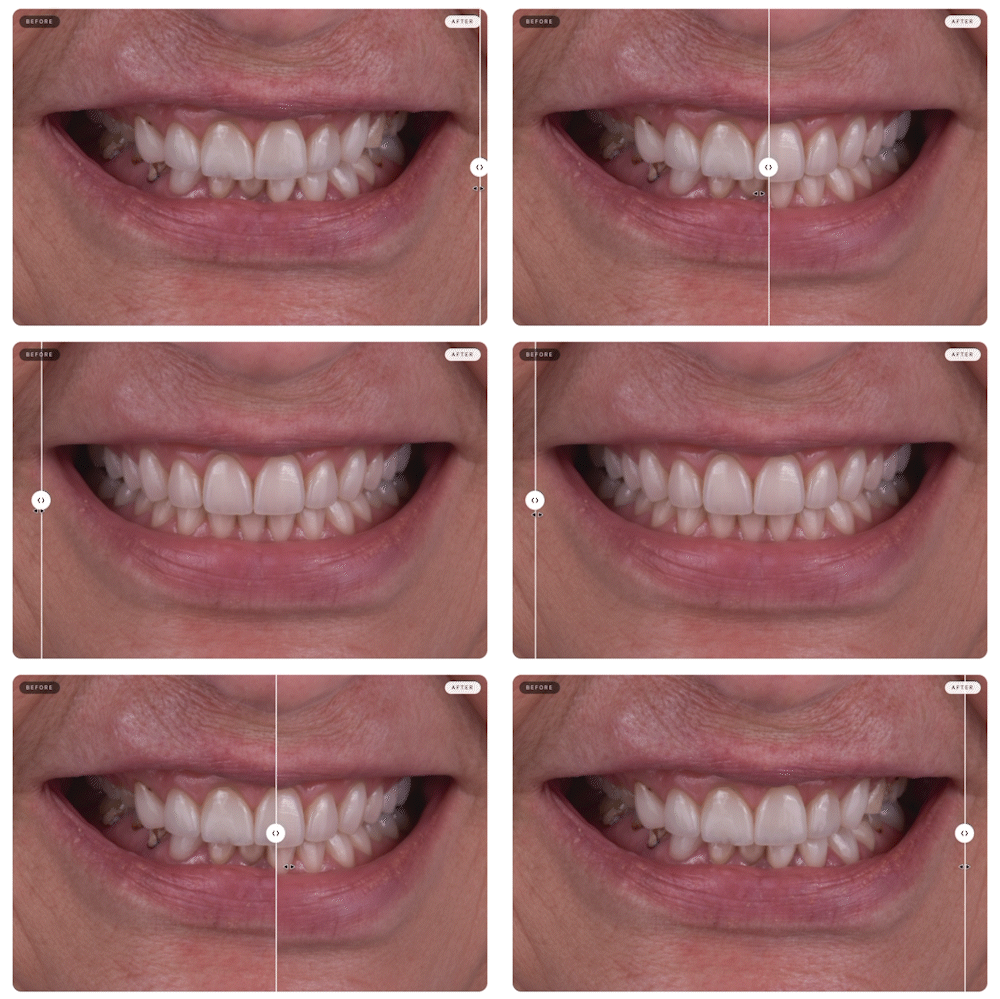
I plan every makeover from photos of your smile and face, and old pictures of you help when you have them. You see a preview of your potential new smile on screen before anything is done, and you wear temporary veneers to try the new look in your own life before the final porcelain is made. It's a preview, not a promise, but it lets you shape the result before anything is permanent. I walk through every step in the smile makeover process.
Full mouth rehabilitation starts from a different place. The teeth aren't just unattractive. They're breaking down.
That can look like teeth that have gotten shorter over the years, edges that are flat and chipped, crowns and fillings that keep failing, teeth that are missing, or a bite that feels different than it used to. Grinding is one of the biggest drivers. Untreated grinding can lead to tooth erosion and loose or cracked teeth, and over years it can take enough height off the teeth that the whole bite closes down.
Rehabilitation rebuilds that foundation. The plan often includes crowns to restore worn or broken teeth, implants or bridges to replace missing ones, gum treatment where it's needed, and a night guard to protect the finished work. It's done in phases, health first, so it never has to be overwhelming.
And it changes how you look, too. When worn teeth get their height back, the smile fills out, the lips are supported again, and the face often looks more rested.
I'm Darya Timin, DDS, FAGD, and my Kois training taught me to plan from the bite outward. These are the three things I look at first.
1. Is the bite stable? I look at how your upper and lower teeth meet, whether your jaw is comfortable, and whether the teeth have been wearing down. If the bite is collapsing or the wear is active, a cosmetic plan alone won't last. Porcelain on top of a bite that's grinding itself apart will chip and crack the same way your teeth did.
2. How healthy is each tooth? Old crowns with gray edges, large fillings with decay underneath, cracks and root problems all need repair, not just a new surface. When many teeth need that kind of work, we're in rehabilitation territory, even if your main goal is how your smile looks.
3. How healthy are your gums? Bleeding, puffy gums come first in either plan. They're not "just gums." Inflamed gums are an open door for bacteria and inflammation to reach the rest of the body, and they're where dark lines and new decay start around crowns and veneers. A deep cleaning and a healthy gum line make both plans last.
My rule is conservative first. I want to remove as little natural tooth as possible, and sometimes the right answer is to leave a tooth alone.
So if your bite is stable and your teeth are healthy, I'll steer you toward a smile makeover, and often a smaller one than you expected. I'm not going to talk you into rebuilding teeth that work.
But if I see active wear, failing work or a bite that has changed, I'll tell you honestly that a makeover isn't enough. Covering those problems with new porcelain looks good for a while and then fails, and that's the pattern that left your mouth full of mismatched work in the first place. In that case, full mouth rehabilitation is what fixes it once, in phases, built around how your bite works now.
Many plans sit somewhere in between. A few back teeth may need crowns for strength while the front teeth get veneers for appearance. That's fine. The name on the plan matters less than doing things in the right order. I talk more about what changes later in life in full mouth rehab at 60.

This is the fear I hear most from people who've waited years: looking fake, too white, too uniform, "done." It's a fair worry, especially with a plan that touches many teeth at once.
Three things keep the result natural. The porcelain is thin enough that light passes through it, the way it does through enamel. All-ceramic or porcelain crowns mimic the appearance of tooth enamel more than any other type, which matters when many teeth are restored. The tooth color is chosen to suit your face and skin, not the whitest option. And each tooth keeps small differences in shape and length, because natural teeth are never identical. Nobody should be able to tell.
A smile makeover typically runs $62,700 to $75,240. A makeover combines several treatments, often veneers or crowns across many teeth plus any gum or bite work, so the total depends on how many teeth are involved and what each needs.
Full mouth rehabilitation also typically runs $62,700 to $75,240, for the same reason: it rebuilds most or all of the teeth, and the plan decides the total.
We file the claim with your insurance for you, so if your plan has out-of-network benefits, you can use them. Depending on the plan, insurance has helped cover crowns, night guards and deep cleanings, which are often part of a rehabilitation plan. Medicare and Medicare Advantage plans with out-of-network benefits are accepted the same way, and HSA and FSA cards work too. Cherry lets you split treatment into monthly payments. If you don't have dental insurance, the Smile Wellness Membership includes 10% off other treatment, with some exclusions. For long visits, we offer sedation options: nitrous oxide, oral conscious sedation and IV sedation.
You don't have to figure out the label yourself. That's my job. Your consultation is free. Bring the old photos of your smile if you have them, and the questions you've been carrying. You'll leave knowing whether your teeth need a makeover, a rebuild or a bit of both, and a plan that fixes it once.
If you'd like a first look from home, try the free virtual consult: upload a photo of your smile, see a preview of what a makeover could look like, and I'll send back a personalized video with your treatment plan. When you're ready to sit down together, book a consultation or call (214) 295-9270. Beautiful. Balanced. Biomimetic.
Quick answers to the follow-up questions patients ask most often. If yours isn't here, Dr. Timin is happy to walk you through it personally.
Get a custom treatment plan built around your smile, your bite and your health, designed by Dr. Timin.
Often, yes, but the grinding has to be part of the plan. Heavy grinding wears and cracks porcelain the same way it wears natural teeth. Darya Timin, DDS, FAGD checks the bite and the wear first, and may add a night guard or recommend rebuilding the bite before any cosmetic work.
Usually not. Most plans are done in phases, starting with health: gums, any infection and the teeth at most risk. Then the bite and the remaining teeth are rebuilt in a planned order. Phasing makes the work easier to schedule and easier to adjust as you go, and each phase builds on a healthy base.
Three habits do most of the work. Wear a custom night guard if you grind, clean between your teeth every day, and keep regular cleanings so the gums around crowns and veneers stay healthy. The natural tooth at each edge can still decay, so those edges get checked at every visit.
Full mouth rehabilitation typically runs $62,700 to $75,240 at Redefine Dental Aesthetic and Wellness Center. It rebuilds most or all of the teeth, so the total depends on how many teeth are involved and what each needs. Depending on the plan, insurance has helped cover crowns, and Cherry offers monthly payments.