

Fixing a Chipped Front Tooth With Cosmetic Bonding: What to Expect
Services
August 7, 2026



It happened in a second. A fork, an ice cube, a water bottle at the gym, and now there's a little corner missing from your front tooth. Your tongue keeps finding the rough edge. You catch yourself smiling with your lips closed. And somewhere in the back of your mind you're wondering if fixing a chipped front tooth means bonding, a veneer or a crown, and whether anyone will be able to tell.
For most small chips on a front tooth, bonding is the simplest fix. I match tooth-colored material to your tooth, build the missing corner back in thin layers, harden it with a light and polish it so it blends in. Little or no healthy enamel is removed. Bonding takes 1 to 3 visits depending on how many teeth are treated, and it costs $600 to $1,485 per tooth, with a small chip at the low end. Before I start, I check why the tooth chipped, because a chip caused by grinding or a heavy bite will come back unless we deal with the cause.

A chip isn't usually an emergency, but a few steps help.
Not every chip should be bonded. When someone comes in with a chipped front tooth, I look at three things first.
1. How big the chip is. A small corner or a thin sliver off the edge is ideal for cosmetic bonding. If a large part of the tooth is gone, or the break reaches the nerve, the tooth needs more support than bonding can give, and a crown may be the better choice.
2. Why it chipped. An ice cube is bad luck. A front tooth that chipped while you were eating a sandwich is a different story. Grinding can stress your teeth and cause them to crack or chip, and so can a bite where the front teeth hit too hard. If that's the cause, I fix the chip and protect it with a custom night guard, or we look at the bite itself. Otherwise the same edge chips again.
3. The health of the tooth and gums around it. Bonding sticks best to healthy enamel. If the enamel is thin from acid or dry mouth, or the gums around the tooth are red and bleeding, I want to know why. Some medications reduce saliva, and less saliva means weaker protection for enamel. Gums that bleed are never just gums; that inflammation is linked to the rest of your body. Fixing the cause comes first, and it makes the repair last longer.
If you're weighing bonding against porcelain for a bigger change, I explain how I choose in how I decide between veneers and bonding.
For a single small chip, the process is simple and quick. Here's what to expect, step by step.
Choosing the color. I match the bonding material to your tooth color in natural light before your tooth dries out, because teeth look lighter when they're dry. Front teeth often have a slightly see-through edge, so I may layer two or three colors to copy it.
Preparing the surface. The enamel around the chip is lightly roughened and cleaned so the material grips it. For a small chip, little or no healthy tooth is removed. Numbing is often not needed, though I'll numb the area if the chip is deep or the tooth is sensitive.
Building the corner back. I add the tooth-colored material in thin layers and sculpt each one by hand, then harden it with a blue light. Layering is what keeps the repair from looking like a flat, solid patch.
Shaping and polishing. I shape the edge to match the tooth next to it, check how your teeth meet when you bite and slide your jaw, and polish the surface until it reflects light like the enamel around it.
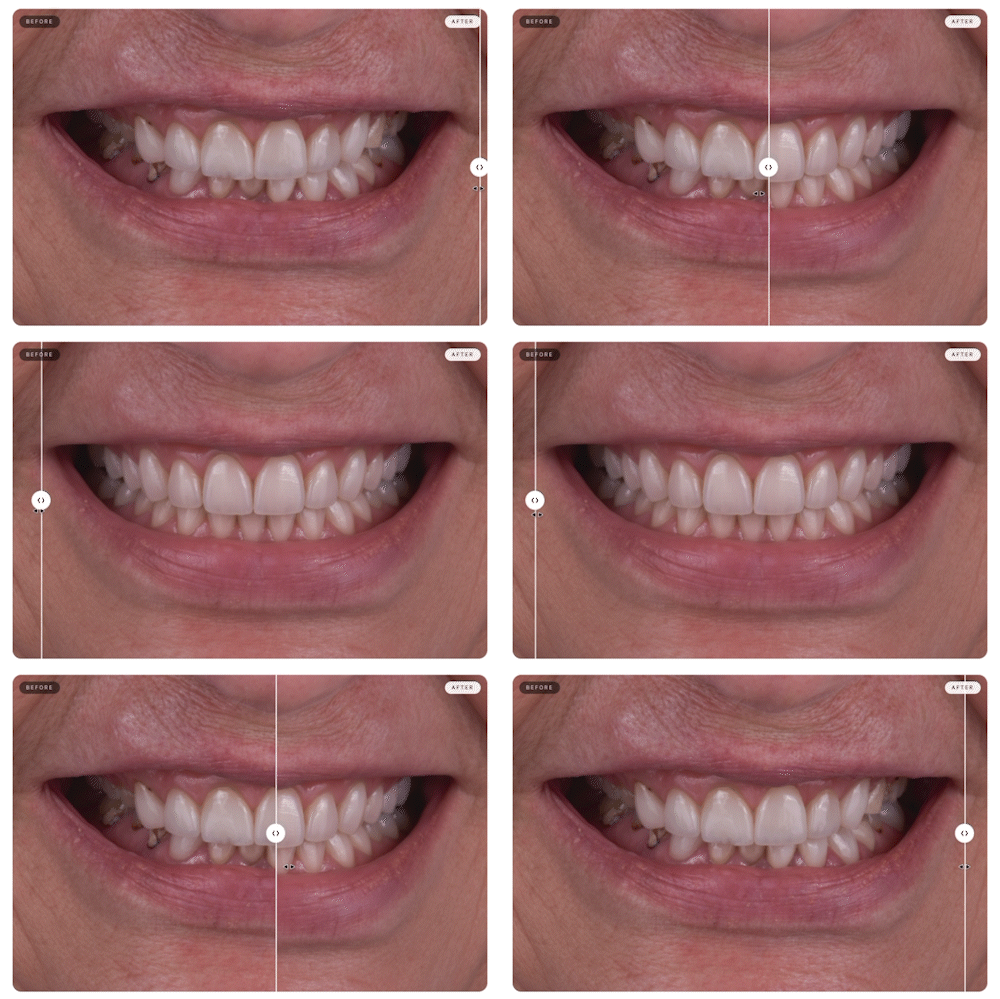
If several teeth are involved, or you want to change the shape of the teeth next to the chipped one too, bonding can take up to three visits. When you'd like to see the result before we start, I take photos and show you a preview of your potential new smile on screen. It's a preview, not a promise, and it helps when we're changing more than one tooth.
When bonding is done well, no. That's the goal.
Three details make a repair invisible. The color has to match your tooth, including the slightly see-through edge that natural front teeth have. The shape has to follow the tooth next to it, with the same small curve at the corner instead of a sharp, straight line. And the surface has to be polished to the same shine as your enamel, so it catches the light the same way.
Bonding isn't stain-proof the way porcelain is. Over time, coffee, tea and red wine can tint it slightly, and the polish can dull. A quick polish at your regular cleaning usually brings it back.
A bonded tooth needs the same care as your other teeth, plus a little common sense about the edge we repaired.
If a bonded edge ever chips again, the good news is that bonding can usually be repaired or added to without starting over.
A chipped front tooth doesn't have to mean a crown or a veneer. In most small chips, bonding keeps your natural tooth and gives you back the smile you had last week.
I'm Darya Timin, DDS, FAGD, and at Redefine Dental Aesthetic and Wellness Center in Dallas I'll check the chip, find out why it happened and tell you honestly whether bonding is the right fix. Your consultation is free. If you want a first look from home, try the free virtual consult. When you're ready, book a consultation or call (214) 295-9270. HSA and FSA cards are accepted, and we file the claim with your insurance for you, so if your plan has out-of-network benefits, you can use them.
Quick answers to the follow-up questions patients ask most often. If yours isn't here, Dr. Timin is happy to walk you through it personally.
Get a custom treatment plan built around your smile, your bite and your health, designed by Dr. Timin.
Often, yes, with protection. Grinding puts heavy force on the biting edges of the front teeth, and that force can chip bonding the same way it chipped the tooth. Darya Timin, DDS, FAGD checks the wear on your teeth first and may recommend a custom night guard to protect the repair while you sleep.
Usually not much. Bonding a small chip adds material to the tooth instead of removing much, so numbing is often not needed. If the chip is deep or the tooth is sensitive, Dr. Timin can numb the area, and sedation options are available for anyone who feels anxious at the dentist.
It is better to cut it up. Bonding material is strong enough for normal eating, but biting straight into hard foods with a bonded front tooth puts force on the exact edge that was repaired. Chewing ice, biting nails and opening packages with your teeth are the habits most likely to chip it again.
Cosmetic bonding is $600 to $1,485 per tooth at Redefine Dental Aesthetic and Wellness Center. A small chip sits at the low end, and covering the whole front of a tooth sits at the high end, because the price follows how much of the tooth is rebuilt. HSA and FSA cards are accepted.