

How Long Does Cosmetic Bonding Last? What Lakewood Patients Should Know
City
September 4, 2026



You chipped a front tooth, or there's a small gap that shows in every photo, and bonding sounds like the easy fix. It's quick, it doesn't mean grinding your teeth down, and it costs less than veneers. Then the doubt creeps in. How long does cosmetic bonding last before it chips, stains or needs to be redone, and is it worth doing if you'll be back in the chair in a couple of years?
If you're weighing Cosmetic Bonding in Lakewood, that question deserves a straight answer before you book anything.
Cosmetic bonding typically lasts between three and 10 years before it needs a touch-up or replacement. Where you land in that range depends on four things: whether you grind or clench, how much of the tooth the bonding rebuilds, what you bite and drink, and how healthy your gums are. A small chip repair on a tooth with a calm bite tends to last longest. The good news is that bonding can usually be repaired or refreshed without starting over, and in most cases your natural tooth stays intact underneath.

Whether you live off Gaston Avenue, near La Vista Drive or closer to Lakewood Shopping Center, the bonding questions tend to sound the same. They usually come with a date attached: a wedding, a family photo, a new job.
I like bonding for the right tooth. It keeps your own enamel in place and it can be undone. Those are two things I value when someone wants a subtle change, not a new set of teeth.
When someone asks me how long their bonding will last, I can't give a fair answer until I've looked at three things.
1. Your bite and any grinding. This is the biggest one. Grinding and clenching at night can leave you with worn, loose or cracked teeth, and bonding material takes that same force. I look at where your edges are worn flat, how your upper and lower front teeth meet, and whether your jaw muscles look overworked. If you grind, a custom night guard protects the bonding while you sleep, and it helps the bonding last toward the longer end of its range.
2. How much of the tooth the bonding rebuilds. Filling a small chip on a corner is a light job for the material. Covering the whole front of a tooth, or building a short tooth longer, puts more of the bonding in the line of fire every time you bite. The bigger the rebuild, the more I think about whether porcelain veneers would serve you better over the long run. I walk through that decision in detail in how I decide between veneers and bonding.
3. Your gums. Bonding that sits next to puffy, bleeding gums collects plaque at its edge, and that edge is where staining and new decay start. It's never just about the tooth. Bleeding gums are an open door: the bacteria and inflammation there are linked to problems elsewhere in the body, too. When the gums need help, I treat them first, and the bonding goes on once the tissue is calm.
Bonding is a tooth-colored resin, shaped and hardened right on your tooth. It's strong, but it isn't porcelain. Two things wear it out.
Chipping. The thin edges of bonded front teeth can chip under sudden force. Biting into apples or crusty bread, chewing ice, biting nails, holding pens in your teeth and opening packages are the usual culprits.
Staining. The material doesn't resist stains as well as porcelain. Coffee, tea, red wine and smoking slowly dull it, and the edges pick up color first.
A few habits push your bonding toward the long end of its range:
When bonding does chip or dull, it can usually be repaired or polished without replacing the whole thing. That's one of its quiet advantages over porcelain.
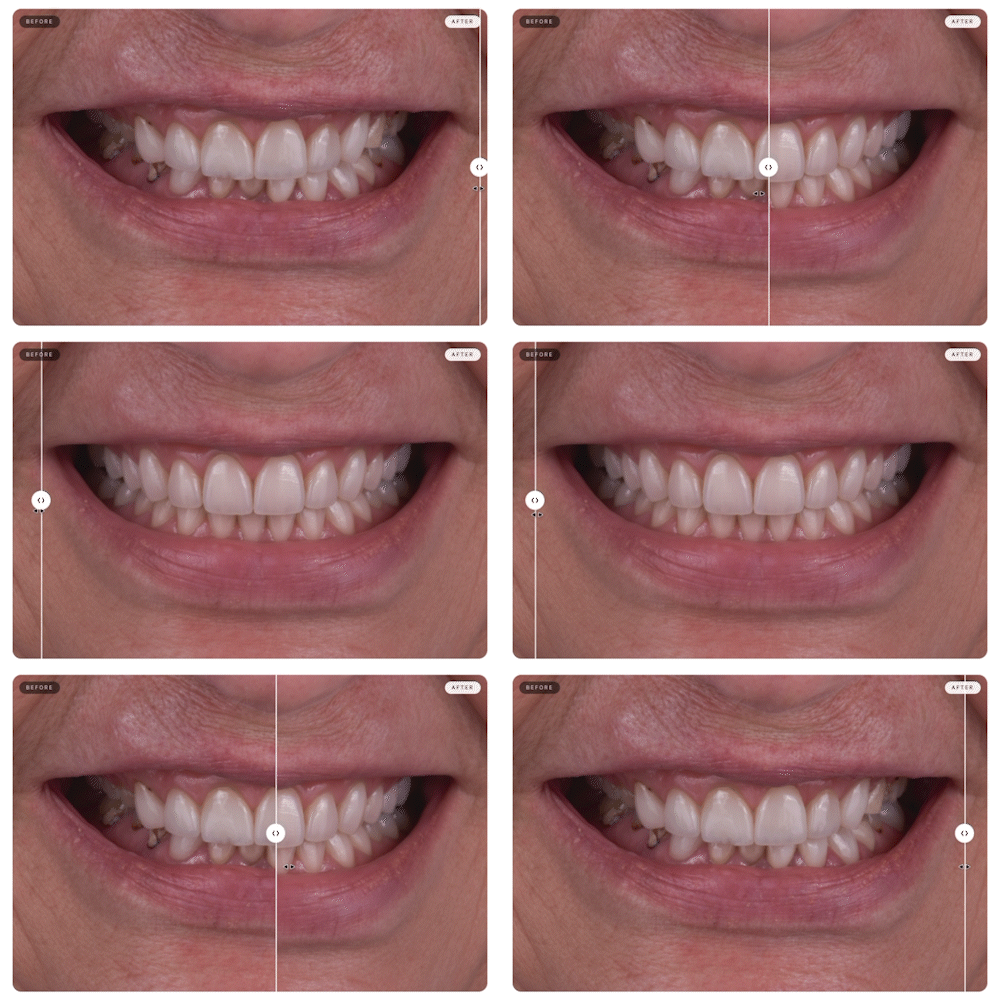
Good bonding disappears. The tooth color matches its neighbors, the edge has the slight see-through quality natural front teeth have, and the surface has the same faint texture as enamel instead of a flat shine. Nobody should be able to point to the bonded tooth.
That's why I plan it carefully, even though it's a smaller treatment. I start with photos of your smile, then show you a preview of the result on screen before anything is done. If you want your teeth lighter, we talk about teeth whitening first, because bonding is matched to your tooth color on the day it goes on.
Bonding takes 1 to 3 visits, depending on how many teeth are being treated. The steps are simple. The tooth surface is cleaned and lightly roughened so the material grips, tooth-colored resin is added in thin layers and hardened with a light, then it's shaped and polished to match the teeth around it. I check your bite before you leave so the new edge meets the way it should.
Cosmetic bonding is $600 to $1,485 per tooth. The range depends on how much of the tooth is being rebuilt: a small chip or gap repair sits at the low end, and covering the whole front of a tooth sits at the high end. You'll know your total before we start.
We file the claim with your insurance for you, so if your plan has out-of-network benefits, you can use them. HSA and FSA cards work too, and you can split treatment into monthly payments through Cherry. If you don't have dental insurance, the Smile Wellness Membership includes preventive wellness visits each year and 10% off other treatment, with some exclusions.
Bonding is one of the most conservative ways to fix a chip or a small gap, and with the right bite and a few good habits it can serve you for years. I'm Darya Timin, DDS, FAGD, and in a free consultation at Redefine Dental Aesthetic and Wellness Center I'll check your bite and your gums, show you a preview on screen, and tell you honestly whether bonding is the right tool for your tooth.
Want a head start from home? Try the free virtual consult: upload a photo of your smile, see a preview of what could change, and I'll send back a personalized video with your treatment plan. When you're ready, book a consultation or call (214) 295-9270.
Quick answers to the follow-up questions patients ask most often. If yours isn't here, Dr. Timin is happy to walk you through it personally.
Get a custom treatment plan built around your smile, your bite and your health, designed by Dr. Timin.
Often, yes, with protection. Grinding puts heavy force on the biting edges, and bonding material chips more easily than porcelain under that force. Darya Timin, DDS, FAGD checks the wear on your teeth and your bite first, and a custom night guard is usually part of the plan when grinding shows up.
Usually, yes. Bonding is added to the surface of the tooth, and in most cases little or no enamel is removed, so the material can be polished off or replaced later. That makes it one of the most conservative ways to fix a chip or a small gap.
It's safer to cut it up. Biting straight into hard foods with bonded front edges is one of the common ways bonding chips. Slicing apples, skipping ice and never using your front teeth to open packages helps the bonding last toward the longer end of its range.
Cosmetic bonding is $600 to $1,485 per tooth at Redefine Dental Aesthetic and Wellness Center. A small chip sits at the low end because only a little material is added, while covering the whole front of a tooth sits at the high end. Monthly payments through Cherry are available.