

Old Crown Showing a Dark Line at the Gums? Preston Hollow Patients Ask
City
October 13, 2026



You catch it in a photo first. One of your front teeth has a thin gray line right where it meets the gum, and the longer you look, the more it stands out next to the teeth around it. It's the crown you got years ago, the one that looked fine when it went in. Now nothing in your mouth seems to match, and you've started smiling with your lips closed. Before you decide anything, you want to know what a dark line at the gums actually means, and whether fixing it means starting over.
A dark line at the gums around an old crown usually comes from one of three things: a metal layer inside an older crown showing as the gum pulls back, the darker root of the tooth showing below the crown's edge, or decay and stain creeping in where the crown no longer seals. Some of these are cosmetic. Some are a problem with the tooth underneath. I'm Darya Timin, DDS, FAGD, and I check the gum, the seal and your bite before recommending anything. Sometimes the answer is a new dental crown made to match your teeth. Sometimes it's treating the gum first. Occasionally it's leaving the crown alone.

Many crowns placed twenty or thirty years ago were built porcelain over metal. The metal gave strength, and the porcelain on top gave the color. When those crowns were new, the gum covered the edge where the metal sat. Over the years gums can recede, and then that edge shows as a gray or dark band. Porcelain on these crowns can also chip off over time and expose the metal underneath.
The second cause is the tooth itself. Below the enamel, the root of a tooth is naturally darker and more yellow. When the gum pulls away from the teeth, making them look longer, a strip of root shows between the crown and the gum. It reads as a dark line even on an all-porcelain crown.
The third cause is the one I worry about most. An old crown can lose its seal at the edge. Stain, plaque and eventually decay work their way into that gap, and you see it as a dark rim. That's not a color problem. That's the tooth under the crown asking for attention.
From across the room, all three look alike. In the chair, they're different problems with different fixes.
The questions I hear about older crowns are remarkably consistent, whether someone lives off Walnut Hill Lane, along Royal Lane or closer to Preston Road.
Replacing a crown is permanent work on a tooth that has already been through a lot. So I look at three things first.
1. The gum around it. If the gum is red, puffy or bleeds when you brush, that comes first. A new crown placed against inflamed gum has the same future as the old one. It's never just the gums, either. Bleeding gums are an open door: the bacteria and inflammation there can get into the bloodstream, and gum disease is linked to heart disease and diabetes. When the tissue needs help, a deep cleaning with salivary testing settles it down and shows what is driving the problem before we plan the crown.
2. The seal at the edge. I check whether the old crown still fits tightly against the tooth, whether there's decay at the edge, and how much healthy tooth is left underneath. If the seal is intact, the gum is healthy and the line doesn't show when you smile, leaving it alone is a fair choice. I'm conservative by default. Not every old crown needs replacing.
3. Your bite and any grinding. Crowns take a lot of force, especially if you clench or grind at night. I look at the wear on your other teeth and how your upper and lower teeth meet. If grinding is part of the picture, a custom night guard protects the new crown while you sleep. Planning from the bite outward is what lets dental work last instead of breaking down one tooth at a time.
The fear I hear from people who've lived with mismatched dental work for decades is simple. They don't want to trade one obvious tooth for another.
Modern all-ceramic crowns have no metal layer, so there's no gray edge waiting to appear if the gum shifts later. Porcelain crowns mimic the look of tooth enamel better than any other crown type. That matters on a front tooth, where light passes through the edges of your natural teeth and you'd notice a crown that blocks it.
I choose the tooth color to match the teeth next to it, not the whitest option available. The shape follows your own teeth, including the small differences in length and edge that every natural smile has. The goal is that nobody can pick out which tooth is the crown, including you, a month later.
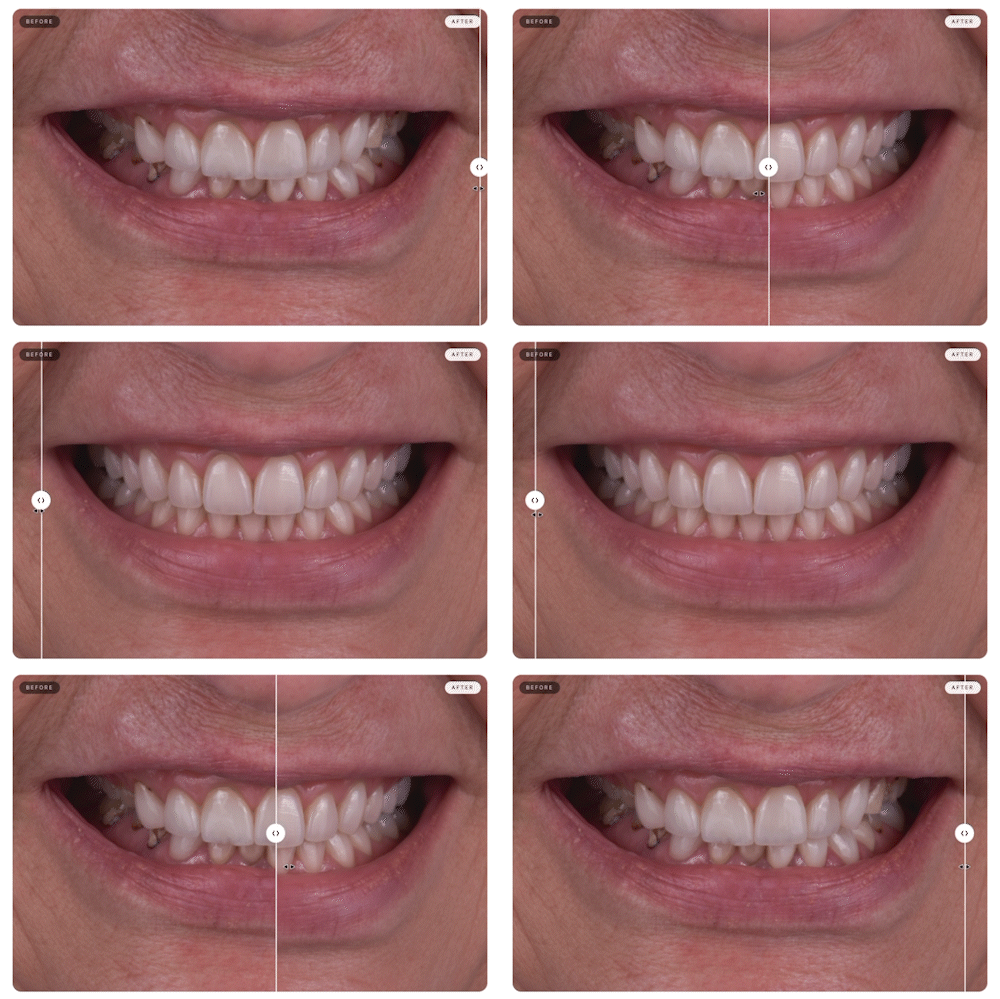
If more than one or two front teeth are involved, I take photos of your smile and show you a preview of your potential new smile on screen before anything is done. It's a preview, not a promise, and it's where you tell me "that's too white" or "that one looks too long."
At a high level, the order never changes. First comes the exam: the gum, the edge of the crown, the bite, and photos of your smile. If the gum needs treatment, that happens before the crown work, because healthy tissue is what keeps a new edge hidden.
Then the old crown comes off, and I check the tooth underneath. Any decay is cleaned out and the tooth is shaped for the new crown. The new crown is made to match your neighboring teeth and is bonded in place, and I check your bite before you leave so it meets the way your other teeth do. If you're anxious about dental visits, we offer sedation options, including nitrous oxide (laughing gas), oral conscious sedation (a pill taken before the visit) and IV sedation.
A crown is $2,750 per crown. The fee is per crown, so the total follows how many crowns we replace, and you'll know the number before any work begins. Depending on your plan, insurance has helped cover crowns. We file the claim with your insurance for you, so if your plan has out-of-network benefits, you can use them. Medicare and Medicare Advantage plans with out-of-network benefits work the same way, HSA and FSA cards are accepted, and you can split treatment into monthly payments through Cherry.
If you're weighing whether a crown or a thinner restoration fits a front tooth, I explain how I decide in when a crown is better than a veneer.
A dark line at the gum is easy to live with for years, and easy to stop seeing until a photo shows it to you again. You don't have to decide today whether to replace it. You only need to know which of the three causes you're dealing with, and whether the tooth underneath is healthy.
Your consultation is free. You'll leave knowing what the line is, what I'd do about it and what I'd leave alone, with a plan that fixes it once and fits around your life. Book a consultation with Redefine Dental Aesthetic and Wellness Center in Dallas, or call (214) 295-9270. If you don't have dental insurance, the Smile Wellness Membership covers preventive wellness visits and gives 10% off other treatment, with some exclusions.
Quick answers to the follow-up questions patients ask most often. If yours isn't here, Dr. Timin is happy to walk you through it personally.
Get a custom treatment plan built around your smile, your bite and your health, designed by Dr. Timin.
Yes, usually. Grinding puts heavy force on every crown, so Darya Timin, DDS, FAGD checks the wear on your teeth and how your bite meets before choosing the crown material. A custom night guard worn while you sleep protects the new crown and the teeth around it.
Sometimes. If the edge is still sealed, the gum around it is healthy and the line does not show when you smile, Dr. Timin may suggest keeping an eye on it. A dark edge with decay, bleeding gums or a loose fit should be replaced before the tooth underneath is damaged further.
Gentle, daily cleaning at the gumline is the biggest factor. Brush twice a day with a soft brush angled toward the gum, clean between your teeth every day and keep regular cleanings, because inflamed gums are what tend to pull away and expose the edge of a crown.
A crown is $2,750 per crown at Redefine Dental Aesthetic and Wellness Center. The fee is per crown, so the total follows how many crowns are replaced. Depending on the plan, insurance has helped pay for crowns, and the office files the claim for you. HSA and FSA cards and monthly payments through Cherry also work.